
We explain everything about Guatemala and its physical and cultural characteristics. In addition, how is its economy, religion and the history of this country.
Guatemala
Guatemala is a national state whose official name is Republic of Guatemala . It borders the north with Mexico and Belize and south with Honduras and El Salvador.
It is a sovereign nation of the Central American continent, whose territory was part of the ancient Mesoamerica, one of the cribs of civilization, and was the birthplace of the Mayan and Olmeca cultures. Like many Central American nations, In Guatemala, the historical inheritance of the Spanish colony is combined with the cultures of the Pre -Columbian civilizations .
It is the fourth largest country in Central America with an area of 109,000 square kilometers, and the most populated, with a population of 17,600,000 inhabitants.
Its form of government is A presidential republic, and its capital is the city of Guatemala That, with 3 million inhabitants and a metropolitan area of more than 5 million, it is the most populous city in Central America.
Why is it called “Guatemala”? Guatemala’s name comes from a Nahuatl word: Quauhtlemallanwhich translates as “place of many trees.” It is believed that Guatemala was named for the first time in the letters exchanged by the conquerors Pedro de Alvarado and Hernán Cortés during the conquest of the region.
See also: Central America
Characteristics of Guatemala
Some characteristics of this country are:
- Its population is 17,600,000 inhabitants.
- Its surface is 109,000 square kilometers, which represents a population density of 161.4 inhabitants per square kilometer.
- Its capital is the city of Guatemala.
- The official language is Spanish.
- The predominant religion is the Catholic.
- Pre -Columbian cultures are very important to the country, especially those derived from the Maya.
- Its predominant climate is the warm tropical.
- It has three differentiated regions according to its relief: the mountains and volcanoes of the west, the northeast plateaus, and the coastal plains.
- The Motagua River, with 486 kilometers long, is the largest in the country.
- Its main economic activities are agriculture and tourism.
- His official currency is the quetzal.
Extension, population and capital of Guatemala
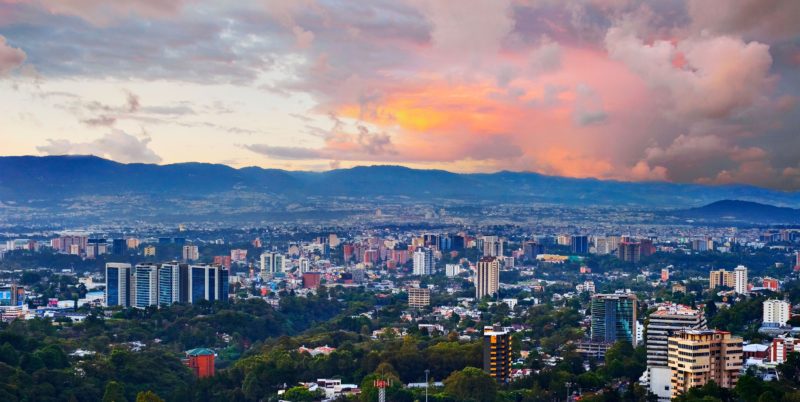
Guatemala has an extension of 109,000 square kilometers . It has a population of 17,600,000 inhabitants, which makes it the most populous country in Central America. Its population density is 161.4 inhabitants per square kilometer.
Guatemala is divided into 22 states called “departments” subdivided into 340 municipalities . The most populous department is that of Guatemala, where its capital is located. The department of Petén, on the border with Belize, is the most extensive in the country: it occupies more than 35,000 square kilometers, which represents 32 % of the country’s total.
The capital of Guatemala is the city of Guatemala . Its metropolitan area has a population of 5,100,000 inhabitants, which represents 28.9 % of the country’s total. Its official name is New Guatemala of the Assumption, and there are the headquarters of the Guatemalan public power and the headquarters of the Central American Parliament.
Climate, relief and hydrography of Guatemala
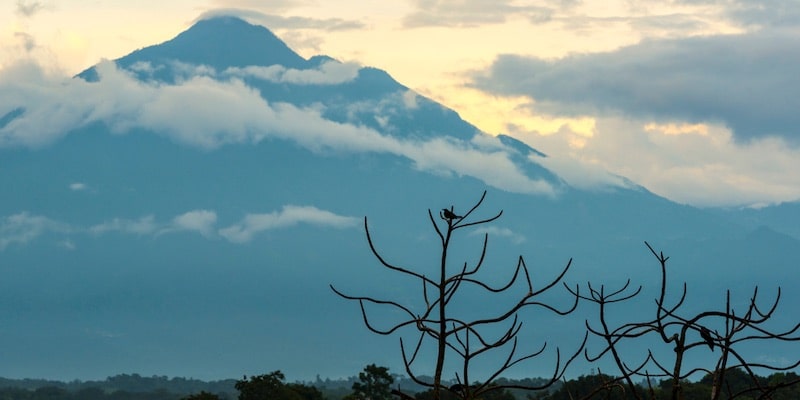
Guatemala’s relief can be divided into three regions:
- The mountainous region . It is the most extensive in the territory. It is made up of high altitude mountains and volcanoes. The maximum height of the region is the Sierra Madre, with abundant volcanoes such as Tajumulco (4220 meters above sea level) and Tacaná (4092 meters above sea level), the highest in Central America.
- The coastal plains . They extend on the coasts of the Atlantic Ocean and the Caribbean Sea. They are low and wavy areas.
- The Northeast Plateau . It is an extensive relatively high region where the Petén Tropical jungle is located. It extends to the Yucatan Peninsula, on the border with Mexico and Belize.
By the action of the Cocos Plate and the Caribbean plate, Guatemala is on a seismic and volcanically active area . Volcanic eruptions and earthquakes are frequent. The 1976 Guatemalan earthquake destroyed practically half of the country’s capital. The eruption of the Santa María volcano in 1902, located in the west of the country, is considered one of the three worst volcanic eruptions of the twentieth century.
Most of Guatemala’s territory has a warm tropical climate with the exception of mountainous areas, which have a Mountain Subhumid Temperate Climate . The warm tropical is a climate that is characterized by high temperatures throughout the year and abundant rainfall. On the other hand, the subhumid temperate climate of mountain has an average temperature of approximately 14 ° C and abundant rainfall in the summer months.
Because of its rainy climate and mountainous relief, the territory of Guatemala is crossed by a large number of rivers . With 486 kilometers long the most extensive is the Motagua River, which is born in the mountain ranges of the west of the country and flows into the Caribbean Sea. Another important river is the Usumacinta, born in Guatemala but takes place mostly through the territory of Mexico.
Guatemala’s flora and fauna have enormous diversity thanks to the warm climate and abundant rains. As for the flora, among the outstanding species is CEIBA, a tree known as Yaxché In Mayan language.
As for fauna, Guatemala houses a wide variety of animal species. Among the most emblematic is the Jaguar, which is considered the largest predator in Central America and is in severe danger of extinction. In the jungles you can also find monkeys, such as the black howl and the spider monkey, which are common in the region. Birds also have great biodiversity, and Quetzal is the most iconic in the country and was considered sacred for Mayan civilization.
In the rivers and lakes there are various aquatic species such as manatíy freshwater turtles.
See also:
- Warm climate
- Tropical climate
Guatemala culture
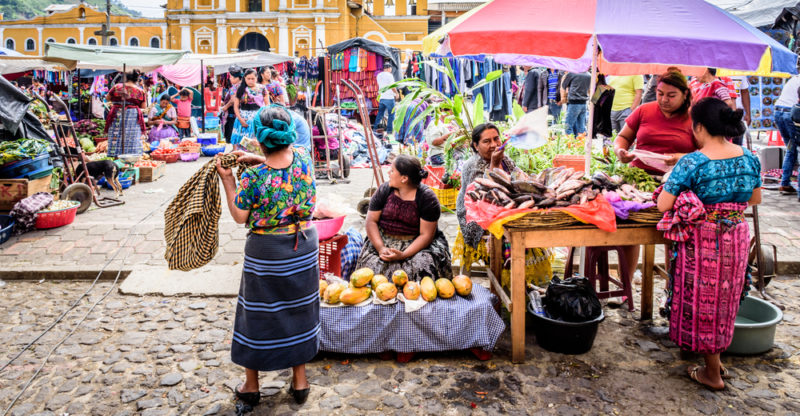
Guatemala’s population is mostly mestizo either indigenous but there is also the presence of white and black population, given its history of multiple colonizing presences (Spanish, Belgian, German and American).
Guatemala is a lay country that is, without official religion. While Catholic and evangelical religions are the most predominant, there is a wide variety of indigenous religious traditions, mainly derived from the Mayan culture.
The official language is Spanish although many of the numerous ethnic groups in the country speak it as a second language. Some of the most spoken indigenous languages in Guatemala are quiche, he mam and the Kakchiquelderivatives of the Maya. In addition, Guatemala is the fourth Latin American country in number of English speakers.
In the field of music, Guatemala has a variety of typical rhythms that are an integral part of its cultural heritage. Among the most prominent is he They are Guatemalan , interpreted with instruments such as marimba, guitar and percussion .
As for the exponents of Guatemalan music, Rafael Álvarez Ovalle, composer of the country’s national anthem, and José Castañeda, orchestra director stand out.
In the field of literature, referents of culture stand out as Miguel Ángel Asturias, winner of the Nobel Prize for Literature in 1967 and Rigoberta Menchú, who stood out for testimonies that make visible indigenous reality.
Guatemalan cuisine offers a wide variety of traditional dishes that reflect the fusion of indigenous and Spanish influences. Among the most prominent dishes are Pepián, a meat stew with tomato sauce and spices, and The tamal, a corn dough food filled with meat and vegetables .
Patrios of Guatemala symbols
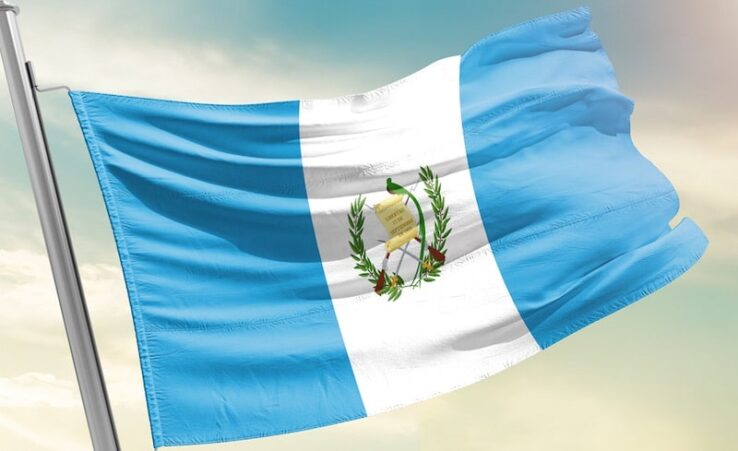
The national symbols of Guatemala are:
- The Guatemala flag. It consists of three vertical stripes, two celestial to the sides and one white in the middle. In the center is the national shield. It was officially adopted in 1847.
- The National Anthem of Guatemala. The lyrics of the anthem was composed by Cuban poet José Joaquín Palma and music by Rafael Álvarez Ovalle in 1879.
- The Guatemala shield . It is composed of a green quetzal, national bird of the country. The Quetzal is supported on a scroll that has the legend “Freedom. September 15, 1821”. Behind the parchment cross two swords and two rifles.
Economic Activities of Guatemala
Guatemala’s most important economic activities are:
- Agriculture Guatemala is the largest worldwide exporter in Cardamomo, the fifth sugar exporter and the seventh of coffee. In addition, it is an important banana producer and exporter.
- The industry . The textile industry, petrochemicals and energy production stands out.
- Tourism . It generates its second largest currency entry to the country. Mayan ruins, indigenous culture, national parks and beaches represent a great tourist attraction for visitors to the country. The most visited sites are Lake Atitlán, the archaeological site of Tikal and the city of Antigua Guatemala.
Its main commercial partners are the United States, China, Mexico, El Salvador and Honduras, and its official currency is the Quetzal.
Guatemala pre -Columbian ruins
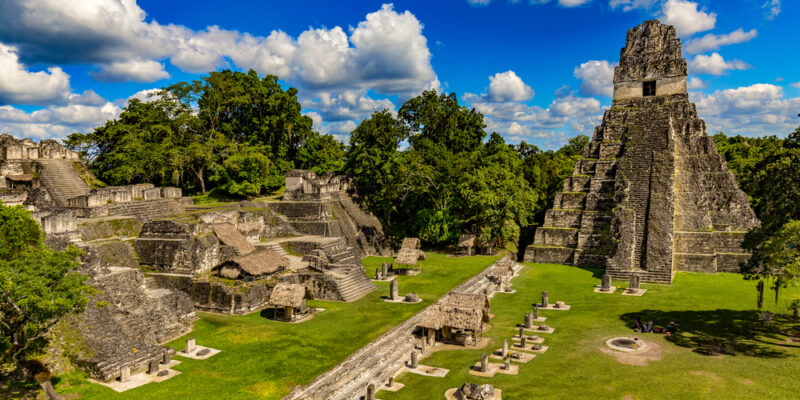
The current territory of Guatemala was part of Mesoamerica one of the pre -Columbian regions of greater cultural and demographic fertility of the continent, and one of the cribs of human civilization.
In particular they prospered Olmeca cultures (1500 BC – 500 AC) and Maya (8000 a. Uaxactún in the same region, a city whose splendor took place around 900 d. C.
Guatemala history
The current territory of Guatemala was inhabited by various populations before the arrival of the Spaniards. The most prominent was the Mayan civilization, which had its splendor era between 300 and 800 d. C.
The Spanish conquest began in 1524, when Pedro de Alvarado founded a settlement called Santiago de los Caballeros de Guatemala. In 1541, this settlement became the capital of the Captaincy General of Guatemala, which was part of the Viceroyalty of New Spain, until in 1776 the capital was established in New Guatemala of the Assumption (current city of Guatemala).
During the colonial era, the General Captaincy of Guatemala included the current territories of Guatemala, El Salvador, Honduras, Belize, Nicaragua and Costa Rica. Independence regarding Spain It was reached in 1821 and Guatemala became part of the first empire of Mexico, which replaced the viceroyalty. Between 1823 and 1839 he joined the United Provinces of Central America, then called the Federal Republic of Central America.
Once separated from the Central American Confederation, conflicts between liberals and conservatives occurred in the Republic of Guatemala, which resulted in dictatorial governments and armed insurrections. At the beginning of the 20th century, the Guatemalan economy depended on the agro -export model and, especially, on the economic interests of the US company United Fruit Company, dedicated to the production of tropical fruits for export.
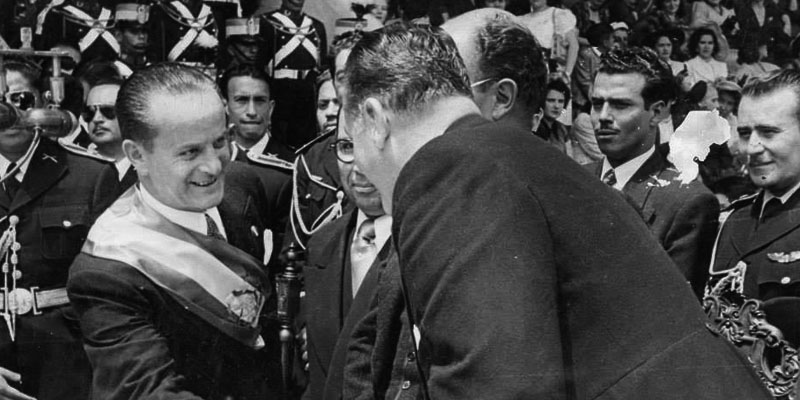
In 1951, the presidency assumed Colonel Jacobo Arbenz, who promoted the expropriation of large properties (including those of United Fruit Company) for distribution among peasants. He was overthrown in 1954 by a coup d’etat that had the support of the CIA. From now on, a stage of clashes between guerrilla organizations and military governments was opened. Democracy was restored in 1986 but the civil war ended only in 1996.
In the 21st century the problem of corruption was worse. In 2006, the CICIG (International Commission against Impunity in Guatemala) was created, an organ endorsed by the UN to help in the investigation of corruption and other illegal acts. The CICIG finished its mandate in 2019 and was not extended by the Guatemalan government.
- Nicaragua
- Paraguay
- Latin America
References
- Aroche, K. (2023) The four cultures of Guatemala. https://aprende.guatemala.com/
- Martínez López, J and Caná, J. (2015) Legal vacuum in the creation of departments. University of San Carlos de Guatemala. https://digi.usac.edu.gt/
- Ministry of Foreign Affairs (2023) Guatemala. Country record. Diplomatic Information Office of Spain. https://www.exteriors.gob.es/
- Roldan, L. (2022) Guatemala Flora and Fauna. https://www.ecologiaverde.com/
- Samayoa, C (SF) Guatemala tourist places. https://www.guatemala.com/


