
We explain everything about Nicaragua, and its physical and cultural characteristics. Also, what is its economy, religion and the history of this country.
Nicaragua
Nicaragua is a national state whose official name is the Republic of Nicaragua. It is located in the center of Central America, and borders Honduras to the north and Costa Rica to the south. Its capital is the city of Managua . It is the largest country in Central America and the fourth most populated after Guatemala, Honduras and El Salvador.
Nicaragua is divided into 15 provincial states called “departments” and two autonomous regions. . The most populated departments are Managua (where its capital is located), Chinandega and León. Its government regime is democratic and presidential, and the nickname of its inhabitants is “Nicaraguans.”
Like most Latin American countries, Nicaragua was a Spanish colony, so the official and most spoken language of the country is Spanish . However, in some regions of the Atlantic coast a variant of English and several indigenous languages are spoken.
Currently, Nicaragua has a republican and presidential political system. . It has full representation at the UN, and is a member of the Organization of American States (OAS), the Community of Latin American and Caribbean States (CELAC) and the Central American Integration System (SICA).
Why is it called “Nicaragua”? It is believed that the name Nicaragua comes from the indigenous words of the area and could be translated as “The Kingdom of those who live next to large reservoirs of water.” Another theory maintains that its name could derive from the word “nic – anahuac” and mean “place next to the great lake.”
Characteristics of Nicaragua
Some characteristics of this country are:
- Its population is 6,730,000 inhabitants.
- It has an area of 130,373 km2 and a population density of 51.6 inhabitants per square kilometer. It is the largest country in Central America
- Its capital is Managua, which has 1,060,000 inhabitants.
- It has coasts on the Pacific Ocean and the Caribbean Sea.
- Its predominant climate is hot and rainy.
- It is located on a seismically and volcanically active zone.
- In its territory is Lake Cocibolca, the largest in Central America.
- Its main economic activities are agriculture, livestock, fishing, mining and tourism.
Extension, population and capital of Nicaragua
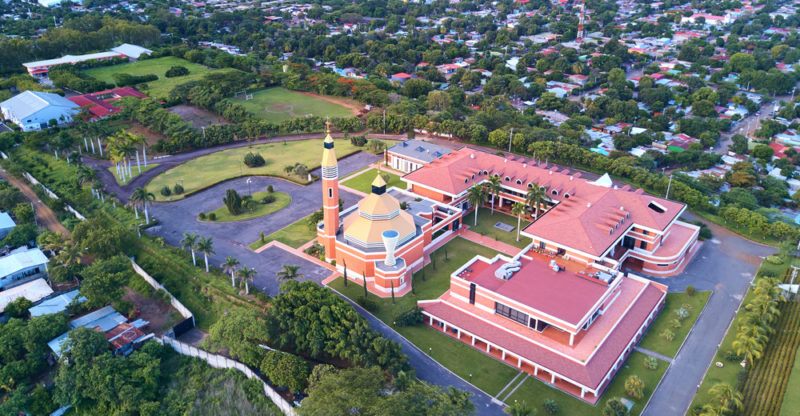
Nicaragua has an area of 130,373 km2making it the largest country in Central America. It has a population of 6,730,000 inhabitants and a population density of 51.6 inhabitants per square kilometer.
It is divided into 15 provincial states called “departments” and two autonomous regions. The most populated departments are Managua, where its capital is located, Chinandega and León. Its two autonomous regions, called North Caribbean Coast and South Caribbean Coast, are located in the east of the country and are two of the largest administrative divisions of the country.
The capital of Nicaragua is the city of Managua . It has a population of 1,060,000 inhabitants and its metropolitan area totals more than 2,200,000, which represents 32.6% of the country's total. Other important cities are León, with 213,000 inhabitants and Masaya with 191,000.
The population of Nicaragua is distributed very unevenly throughout the territory. The largest concentration of population is found on the country's Pacific coast. where its capital Managua and the most populated cities are located. On the contrary, the eastern region is practically unpopulated.
Climate, relief and hydrography of Nicaragua
Most of the territory of Nicaragua has a tropical climate . According to the Köppen climate classification, this climate has two subtypes: the tropical equatorial in the Caribbean area, with high temperatures and abundant rains all year round; and the subtropical monsoon in the Pacific sector, with high temperatures but a marked dry season in winter.
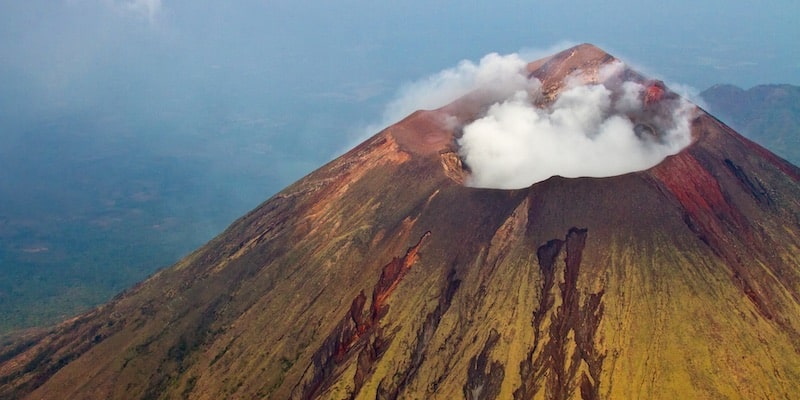
Because it is located in a border area between the Pacifica, Cocos and North America plates, Nicaragua has significant seismic and volcanic activity . The highest reliefs are found in the west of the country, while the east is flatter and undulating.
In the west of the country are the mountains and volcanoes of the Maribios mountain range. The highest reliefs are the San Cristóbal volcano, the highest point in Nicaragua with 1745 meters high, and the Momotombo, Télica and Masaya volcanoes.
The hydrography of Nicaragua stands out for the presence of large freshwater lakes inside its territory. Lake Cocibolca, with more than 8,000 square kilometers of surface, is the largest in Central America and is among the twenty largest freshwater lakes in the world. As for rivers, the Segovia, 841 km long, is the longest in the country.
The flora and fauna of Nicaragua shows the typical ecological adaptations of the humid forest formed by high temperatures and abundant rainfall. Abundant biodiversity is a characteristic of Nicaragua with species adapted to high humidity and heat . As a particular feature, Lake Cocibolca is home to the only species of freshwater sharks in the world.
The 1972 Managua earthquake was the most important in the country's history. It took place on December 23 at dawn. Its magnitude was 6.2 on the Richter scale, and although the energy released was not that much, it caused great destruction in the city of Managua, resulting in hundreds of thousands of people losing their homes and about 20,000 losing their lives.
Nicaraguan Culture

The local culture is, as in all of Central America, a mix between the European heritage and the original heritage of pre-Columbian cultures . Among them are the Nahoas, Chorotegas, Sutiabas, Lenmichies, Chibchas peoples and also the African migrants taken in slavery to Spanish colonial America.
The official and most spoken language of the country is Spanish. However, in some regions of the Atlantic coast a variant of English called “Miskito Coast Creole” and several indigenous languages are spoken. Regarding religion, The most widespread are the Catholic Christian and the Evangelical Christian. .
In terms of art, Nicaragua stands out for having given Latin American culture one of the great representatives of poetry, known as “the prince of Latin American poetry” or “the father of modernism”, Rubén Darío .
Other notable authors in literature have been Ernesto Cardenal (poetry), Gioconda Belli (poetry and narrative) and Sergio Ramírez (narrative). The same happens with painters like Armando Morales, Rodrigo Peñalba or Leoncio Suárez.
Nicaraguan music is influenced by Spanish, African and American culture. The son nica and the palo de mayo are the two most widespread musical genres of popular music in Nicaragua.
The gastronomy is also strongly influenced by the country's colonial history. Most of its typical dishes are made up of corn the traditional crop of Central America and Mexico. Some of the country's typical dishes are Gallo PINto, which is based on rice, and Nacatamal, with corn flour and meat.
National symbols of Nicaragua
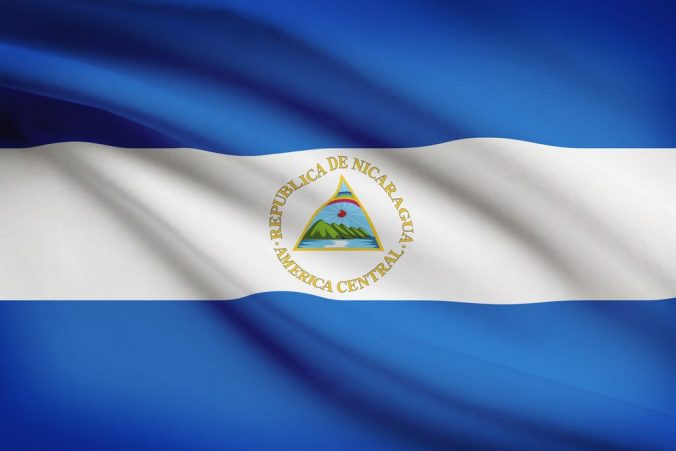
The national symbols of Nicaragua are:
- The flag of Nicaragua . It was created in 1908 but made official only in 1971. It consists of three horizontal stripes of equal thickness and length, the first and last being cobalt blue and the middle being white. In the latter, the national coat of arms appears in the center. As in several of its neighboring countries, it is a flag derived from that belonging to the United Provinces of Central America.
- The anthem of Nicaragua . Its name is “Save You.” It was written by Salomón Ibarra Mayorga and the music was composed by Luis Abraham Delgadillo. It was officially adopted as the national anthem in 1919.
- The coat of arms of Nicaragua . It was created in 1908. It is made up of an equilateral triangle that has five green volcanoes, a Phrygian cap and a rainbow inside. The words “Republic of Nicaragua” and “Central America” appear around the triangle.
Economic activities of Nicaragua
Its main trading partners are the United States, China, El Salvador, Guatemala, Costa Rica and Mexico. The official currency is the córdoba.
The most important economic activities in Nicaragua are:
- Agriculture and livestock . Sugar cane production is the most important primary economic activity in the country, with more than 7 million tons of annual production. Corn and rice follow. Regarding livestock, the most important is the vaccine.
- Fishing . The country's oceanic and maritime influence favors fishing activity. Its main export products are seafood and lobsters.
- Mining . It specializes in the production of gold and silver. Gold represents 24% of the country's total annual exports.
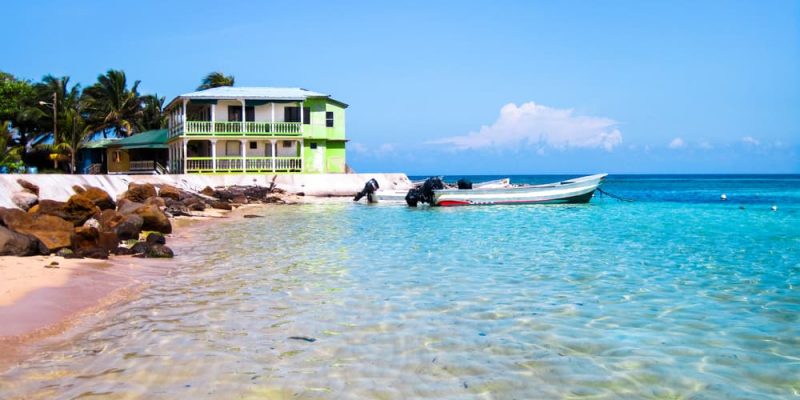
- Tourism . Nicaragua has enormous tourist potential, which combines the Caribbean coasts with the traditions of the American aboriginal peoples.
History of Nicaragua

The first signs of human occupation in the territory of Nicaragua were found on the Caribbean coast and were eight thousand years old. Much later, groups such as the Nicaraguans settled, who migrated from the north after the fall of Teotihuacán and settled around Ometepe, a volcanic island in the middle of Lake Cocibolca.
Nicaragua was part of the American territories of the Spanish crown and was part of the Kingdom of Guatemala, administered by the Royal Court of Guatemala which, in turn, depended on the Viceroyalty of New Spain.
During the independence struggles of the 19th century, the five provinces that made up the Kingdom of Guatemala (including Nicaragua) became independent from the Spanish Empire in 1821 and were annexed to the First Mexican Empire.
In 1823 the empire was dissolved after the resignation of Agustín de Iturbide. Nicaragua and the other Central American provinces formed the United Provinces of Central America, which in 1824 adopted the name of the Federal Republic of Central America. Nicaragua separated in 1838 and began life as an independent republic.
The Nicaraguan 20th century was marked by political instability and military interventions by the United States. Many leaders emerged against foreign intervention, among them the revolutionary peasant Augusto Sandino, assassinated in 1934.
In 1937, General Anastasio Somoza came to power, establishing a dictatorship that lasted in the hands of the Somoza family until 1979, when it was overthrown by the Sandinista Revolution.
In the midst of the Cold War, the United States feared a turn towards communism and imposed an economic blockade on the new government of Nicaragua, which became increasingly dependent on Cuba and the USSR. The U.S. government trained and financed Nicaraguan troops, the “Contras,” who faced the Sandinistas in a civil war.
In 1989 a ceasefire was agreed and in the 1990 elections the National Opposition Union party won the presidency. The Sandinista National Liberation Front returned to power in 2007 and has since headed an authoritarian government chaired by Daniel Ortega.
References
- “Nicaragua” https://es.wikipedia.org.
- “Nicaragua” https://www.visitanicaragua.com/.
- “Population of Nicaragua” http://www.voyagesphotosmanu.com/.
- “Culture of Nicaragua” http://hablemosdeculturas.com/.
- “Nicaragua” https://www.britannica.com/.
- World Bank (sf) Nicaragua: general overview. https://www.worldbank.org/
- Ministry of Foreign Affairs (2023) Nicaragua. Country sheet. Diplomatic Information Office of Spain. https://www.exteriores.gob.es/
- Portillo, S. (2021) Flora and fauna of Nicaragua. https://www.ecologiaverde.com/
- Website of the Nicaraguan Institute of Culture. https://www.inc.gob.ni/


