
We explain what the Inca civilization was and how was its political organization. In addition, its characteristics, economy, literature and more.

What was the Inca civilization?
Inca civilization It was a south American pre -Columbian culture which inhabited the Andean highlands between the thirteenth and sixteenth centuries d. C. managed to conquer neighboring peoples and create an empire that covered territories of the current Peru, Bolivia, Ecuador, Colombia, Argentina and Chile.
From Cusco, its capital, the Incas They developed a cultural tradition that remains active today in various communities . They invented agricultural and architectural techniques that allowed them to control different ecological areas and take advantage of a wide variety of resources. They were large builders, and their road network came to add more than 30,000 kilometers, which today cross mountains, plateaus and plains.
Many of the most important Inca urban centers today remain as archaeological sites and allow specialists to know their civilization, such as Machu Picchu, Choquequira, Ollantaytambo and Písac, among others.
Territorial Organization of Inca Civilization

The Incas They settled in the South American Andean Cordillera and extended their area of influence to the sea: they occupied a long strip of the continent in the territory of the current Bolivia and Peru, and came to cover part of Ecuador, Colombia, Chile and Argentina.
The great capital of the Empire was the city of Cusco, current Peru . This city was divided symbolicly and territorially into two halves: Hanan (which means “high” in Quechua) and Hurin (which means “bass”). This duality was also linked to other important symbols of Inca cosmology:
- Hanan Cusco : associated with the top, the masculine, the Inca Sapa (king), the sun and the gold.
- Hurin Cusco : associated with the low, the feminine, the coya (queen), the moon and the silver.
The Incas called their state Tawantinsuyuwhich in Quechua means “four parts.” This four -participation was geographical, social, political, hierarchical and fundamental for the organization of the labor and ritual tasks of the Inca society. Physically, he manifested from the city of Cusco to the rest of the empire.
- Chinchaysuyo: Part of Hanan Cusco and extends north.
- Antisuyo: part of Hanan Cusco and extends to the east.
- Collasuyo: Part of Hurin Cusco and extends to the south.
- CONTISUYO: part of Hurin Cusco and extends to the west.
History of Inca civilization
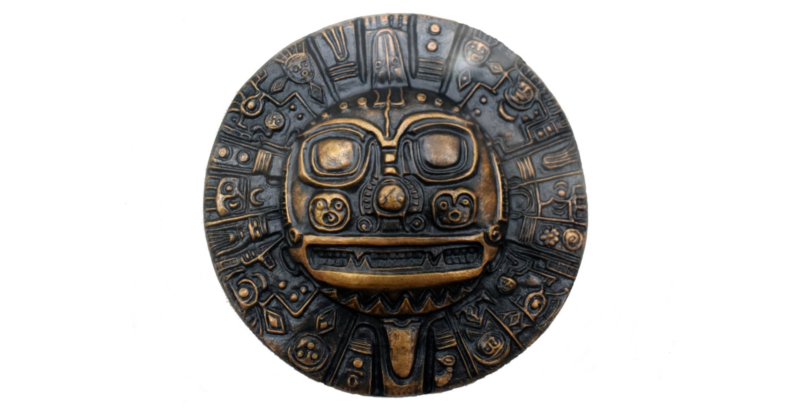
Inca history can be divided into two periods according to the dynasty of its rulers:
- Hurin dynasty (c. 1200-1320 d. C.) . Many of the stories about this era come from oral tradition; Few written historical evidence that allows to tell the history of this rulers dynasty. This dynastic family founded the city of Cusco, created the first terraces agriculture techniques and developed a commercial network in the region. Its rulers were:
- Manco Capac (c. 1200-1230 d. C.)
- Sinchi Roca (c. 1230-1260 d. C.)
- LLOQUE YUPANQUI (c. 1260-1290 d. C.)
- Mayta Capac (c. 1290-1320 d. C.).
- Hanan dynasty (1320-1533 d. C.) . The history of this dynasty is marked by the continuous increase in power of the rulers and the need to control the internal disputes of the Inca nobility. The figures of the rulers reinforced their military and sacred features:
- Inca Roca (c. 1350-1380 AD), Yahuar Huacac (c. 1380-1410 d. C.) and Viracocha Inca (c. 1410-1438 AD) began governing the territories they conquered.
- Pachacuti Inca Yupanqui (1438-1471 d. C.) was the one who founded the Tawantinsuyu and accelerated the rhythm of conquests and the expansion of the Inca state.
- Topa Inka Yupanqui (1471-1493 d. C.) and Huayna Capac (1493-1525 AD) continued the legacy of Pachacuti Inca Yupanqui.
- The dispute between the Huascar brothers (1525-1532 AD) and Atahualpa (1532-1533 d. C.) led to a decade of political conflicts within the empire, which ended with the victory of Atahualpa. However, by 1533 the Spanish conquerors submitted the last emperor of this dynasty.
Historical sources of Inca civilization
The Incas They settled in the Andean region between the twelfth and sixteenth centuries d. C . The specialists argue that it is difficult to draw an exact chronology in their history since the Incas had no interest in creating a general narrative of their people in a linear way. In addition, his conception of time was cyclical and considered that events of different moments of the past had happened at the same time.
The Incas shared their knowledge from generation to generation orally and registered time through a system of Quipus . The Quipus were a set of knotted and dyed colored threads, which they used to register and communicate important dates, events and calculations.
The main written sources that exist to know the Inca past are the chronicles of the Spanish conquerors, who have many contradictions. The Spaniards concentrated on registering the political history of the Incas, highlighting the militaristic features that led to the creation of the Empire, with little attention to the other cultures or subjected peoples that inhabited the Inca space.
Political Organization of the Incas
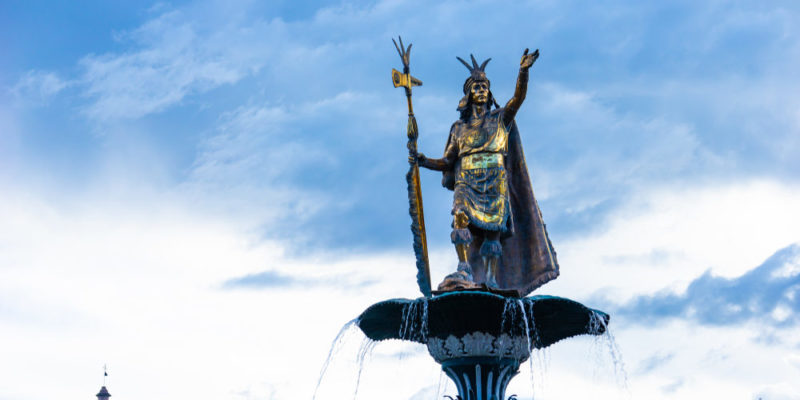
The conquests of the Incas in the fifteenth and sixteenth centuries led to the existence of an extremely numerous empire, with very dissimilar populations with each other that had different level of complexity and wealth in their own organization.
In order to maintain the united empire, the Inca rulers needed not only a strong army but also a rigorous administration that would allow society to control. To do this, they focused on each inhabitant complying with the norms and rites established from the heart of the empire. In addition, they created a hierarchical system of political organization:
- SAPA INCA . He Tawantinsuyu I was headed by an absolute sovereign, called SAPA INCA: He dictated the laws, exercised as a supreme judge, commanded the armies and was the religious leader. The Incas considered that their ruler was a direct descendant of Inti, God Sol. Sapa Inca ruled along with his quya, who was the main queen and wife. Their children were the ones who could be real successors. In addition, the Sapa Inca had other “minor wives” with whom he married to form alliances with the important lineages of Inca society.
- Willaq Umu . It was the high priest of the rite to Inti, God of the Sun. He had to be a close relative of the Inca Sapa and served when he died, until the legal succession was established. Organized the ceremonial of the entire empire, supervised the Villcas (high -ranking priests) and acted as a special advisor to the Inca Sapa.
- Council of the Kingdom . It was made up of 16 nobles representing the Inca lineages of Cusco and of the four his.
- TUKUY RIKUQ . They were inspectors who worked in different areas and spaces of the Inca government and had to inform Sapa Inca about everything that happened.
Social organization of the Incas
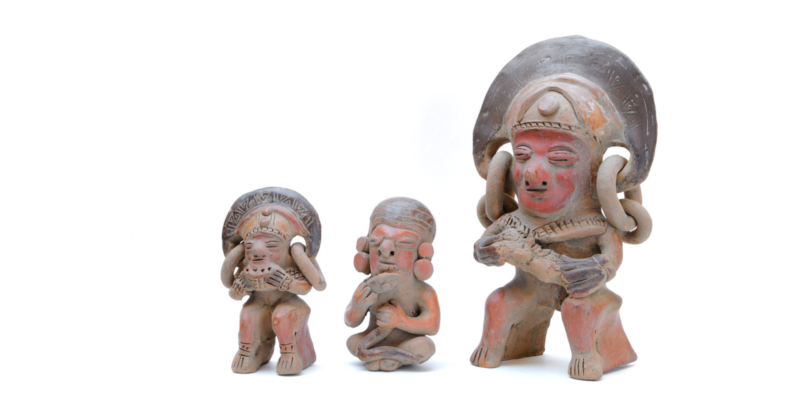
The characteristic duality of Inca culture was reflected in its social organization. On the one hand, Inca society It was organized from groups of people, called ayllus that were considered descendants of the same ancestors. Each ayllu He had a sacred reference place, where they venerated their ancestors and presented offerings. A set of ayllus formed a community led by a Cuaca.
On the other hand, the Incas had a society stratified and made up of:
- Real nobility (PANACA) . He controlled the administration of the State and the religious cult. It was composed of aristocratic family lineages, including that of the Inca Sapa (Emperor) and the Coya (Empress). The nobles enjoyed privileges: they were educated to be rulers, warriors or priests, men could have many wives and used jewelry and clothing that differentiated them from the rest of the population.
- Province nobility (Curacas) . This group was made up of the bosses of each community of Ayllus, considered a second category nobility. They were in charge of representing their communities in front of the State, raised the tribute and recruited the labor for public works.
- Artisans and peasants (Hatun Runa) . They were the ones who carried out all the activities of food and manufacturing production. They had to contribute to the construction of public works and provide military services.
- Yanaconas . These people had been separated from their community of origin and lost contact with their families. They were dedicated to services to the State or the nobility. Their living conditions could be very good, depending on the role they fulfilled and the functions granted to them. They were not servants, because they were free people.
Inca economy

The Inca economy was based on:
- Community work . The peasant work was organized around the Ayllus. All its members had specific obligations depending on the common benefit. The boys and girls protected the sown and the cattle, and dealt with other tasks such as looking for firewood and weaving wool. Adult people worked the land and fulfilled the mita (Periodic work in public works). The elderly organized storage deposits and took care of cattle with children.
- Land control . All the cultivable lands of the Empire were organized in three groups. The lands of the Inca Sapa were worked by peasants to keep the real nobility; The lands of the Sun too, but their product was for priests and religious ceremonies. The lands of the Ayllus belonged to the communities and, every year, they were distributed among the families by curaca.
- State work . The State required that all members of Ayllu, 18 to 50 years of age contribute to the well -being of the Empire through the mita (A work shift system for the construction of public works), the military service (when required) and the payment of taxes (in the form of food and crafts).
- Reciprocity and redistribution . The Inca Empire took advantage of the characteristic reciprocity of the Ayllus communities (all worked for the common benefit) and combined it with the redistribution principle: the Inca Sapa was responsible for having the exchange between the different areas of the empire, stored products paid as taxes and, when necessary, delivered to the communities those foods or manufactures that it needed. In this way, the Inca Sapa consolidated its position and was shown as a “property giver.”
- The use of resources . The Empire was characterized by creating techniques to take advantage of the resources of each ecosystem that inhabited:
- In coastal areas, the irrigation system was done by channels, ditches and wells, and chili pepper, pumpkins and tomatoes could be obtained. In addition, they practiced fishing and obtained seafood.
- In the mountainous areas, they created cultivation terraces and irrigation was made based on rain and thaw. They produced corn, beans, potatoes, coca, quinoa and raised flames and alpacas.
- In the jungle areas, they used the touch system to create cultivation areas (they talked about trees and set fire to the ground to sow) to harvest cotton, cassava, peanuts and fruits.
Inca culture
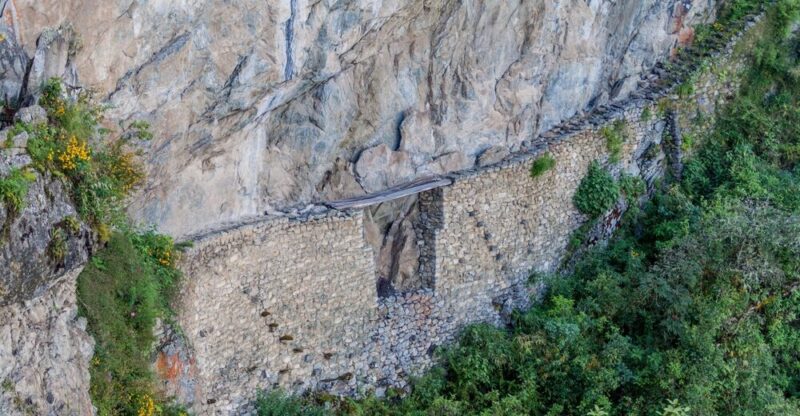
The main cultural features of the Incas were:
- Language . The Incas spoke the classic Quechua language, adopted as the official language of the Empire, which lived with the Aymara, Mochica and Puquina languages. The first documents written in Quechua come from European chroniclers and missionaries, who made phonetic adaptations to the Spanish alphabet. The Incas did not know alphabetical writing, so today there is no way to represent the original sounds of the Inca language.
- Architecture . A fundamental characteristic of Inca culture was the planned construction of cities, roads and bridges. To create an empire based on hundreds of different community peoples and cultures, the Incas used architecture to give homogeneity and integrate the different regions that made it up. As they advanced in the conquest of territories, the architects designed imperial style temples and roads that linked different areas and reached the capital of the empire. He Qhapaq ñam o Camino Real, 5,200 km long, was the central axis of a network of roads and infrastructure of around 20,000 km of surface, which crossed the empire exceeding possible obstacles and crossing the different ecosystems.
- Communication . Inca culture implemented an extremely fast imperial mail and messaging system, which was organized around Chasquis (runner messengers) stationed in the different roads. The chasquis passed messages or packages through positions located 1.5 km away from each other.
- Religion . Inca religion was polytheistic. However, the most venerated gods were inti (Sun God) and Viracocha (creator God). The official cult was directed by the Willaq Umu (high priest). Two annual ceremonies of great importance were organized, through which offerings were made to inti and viracocha and, in turn, the leaders of each community reaffirmed their fidelity to the Inca Sapa. Other important divinities were Illapa (thunder), Pachamama (mother earth), keel (moon) and mamacocha (mother water).
- Oral tradition . Inca stories and myths were transmitted orally, from generation to generation. There were also people especially educated as rapporteurs. Many of the stories were narrated from Cantares, which integrated popular love couplets (Harawi), Hymns of joy (Haylli) and epic stories containing imperial values and mythological legends. Some stories were registered through Quipus, a notation system that allowed to register through knotted laces dates, numbers and dates.
References
- Espinoza Soriano, W. (1978). The modes of production in the Incas Empire.
- Rostworowski from Diez Canseco, M. (1988). Andean power structures: religious and political ideology. Peruvian Studies Institute.
- Covey, RA (2008). The Inca Empire. In The Handbook of South American Archaeology (pp. 809-830). Springer, New York, NY.
- Demarrais, E. (2013). Internal colonization, material culture and power in the Inca Empire. Argentine Relations-Society of Anthropology, 38(2), 351-376.
- Favale, RD (2005). The Inca Empire. Foreign Trade University of Barcelona.


