We explain what the melting point is. What are its characteristics and some examples. Also, what is boiling point.

What is melting point?
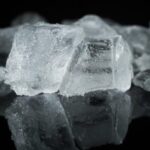
The melting point is called degree of temperature at which matter in a solid state melts that is, it passes into the liquid state. This occurs at a constant temperature and is an intensive property of matter, meaning that it does not depend on its mass or size. The melting point is the temperature at which a solid transforms into a liquid and during this transition the solid and the liquid coexist.
Pure substances have higher melting points and with a lower degree of variation than impure substances (mixtures). The more mixed the matter is, the lower its melting point will be (which will also have a greater variation). Therefore, mixtures have a lower melting point than their pure components. On the other hand, mixtures of solids have what is known as the “eutectic point”, that is, the minimum temperature at which this type of mixture melts. The more mixed the matter is, generally, its melting point will be lower, until it reaches the eutectic point. Taking this into account, the relationship between these properties can be used to determine the degree of purity of some materials.
Furthermore, the melting point is less affected by pressure than the boiling point, and is usually equal to the freezing point of matter (at which liquids become solids) for most substances.
In some cases the melting point will have negative values: this means that at that temperature a frozen substance will return to its initial liquid phase.
Fusion, therefore, is a phase change process (solid to liquid) that operates from the introduction of heat energy to the system or substance, causing the atoms to move with greater speed, increasing the collisions between them. , break the rigid structure and, therefore, flow.
It is a very common process in the metallurgical industry for example, where minerals and metals are melted to give them a specific shape before allowing them to regain their solidity by cooling and losing the heat supplied.
Examples of melting point
Some examples of melting points are the following:
- Melting point of solid water (ice) (H2O): 0 ºC
- Melting point of copper (Cu): 1085 ºC
- Melting point of aluminum (Al): 660 ºC
- Melting point of gold (Au): 1064 ºC
- Melting point of silver (Ag): 962 ºC
- Melting point of steel: around 1375 ºC (depending on its alloy)
- Melting point of carbon (C): 3500 ºC
- Melting point of potassium (K): 64 ºC
- Melting point of tungsten (W): 3422 ºC
- Melting point of argon (Ar): -189 ºC
- Melting point of alcohol: -117 ºC
- Melting point of iron (Fe): 1539 ºC
- Melting point of lead (Pb): 328 ºC
- Melting point of mercury (Hg): -39 ºC
- Nitrogen melting point (N): -210 ºC
- Hydrogen melting point (H): -259 ºC
- Melting point of acetaldehyde: -123.5 ºC
Boiling point

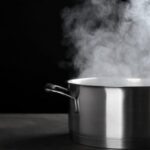
The boiling point is the temperature at which the vapor pressure of a liquid (pressure exerted by the vapor on the liquid in a closed system at a certain temperature) is equal to the pressure around the liquid. When both pressures are equal, the liquid transforms into a gas. Ambient pressure has a great influence on the boiling point that is, if a very high pressure is applied to a liquid, it will have a higher boiling point than if it is subjected to lower pressures and, therefore, it will take longer to transform into vapor when subjected to high pressures. Then, as the boiling point varies greatly at different pressures, the IUPAC defined the standard boiling point: temperature at which a liquid turns into a vapor at a pressure of 1 bar.
When we increase the temperature of a liquid above its boiling point but continue to supply heat to continue raising the temperature, we reach a temperature called the “critical temperature.” At temperatures above the critical temperature, it is impossible to liquefy a gas by increasing its pressure.
The melting point and the boiling point are not comparable and should not be confused.
Continue in: Boiling point
References
- Pedagogical manual of general chemistry practices on a microscale. Nemer, Beatriz Virginia Cervantes. Iberoamerican University (2006). ISBN 978-968-859-594-7.
- “Melting Point” in Wikipedia.