We explain what the Mexican Revolution was, its causes, most important events and its consequences.
What is the Mexican Revolution?
The Mexican Revolution was An armed conflict that took place in Mexico at the beginning of the 20th century . It began in 1910 as an uprising against the dictatorship of Porfirio Díaz (who was overthrown after 30 years in power) and extended over ten years.
In this period, various political factions fought or allied with each other, and some leaders occupied the presidency, such as Francisco I. Madero (between 1911 and 1913) and Venustiano Carranza (between 1917 and 1920). In general, The rejection of landownership already predominated the inherited social inequalities of the porfiriato . But the diversity of political and social projects caused conflicts that sometimes resolved with the murder of revolutionary leaders, such as Emiliano Zapata or Francisco “Pancho” Villa.
Among the consequences of the Mexican Revolution, the 1917 Constitution is told which is still valid today. It collected some of the social demands of the revolutionary period, such as the disqualification of the presidential re -election, labor rights and the capacity of the State to expropriate oil deposits and fractionate estates.
- See also: History of Mexico
Causes of the Mexican Revolution
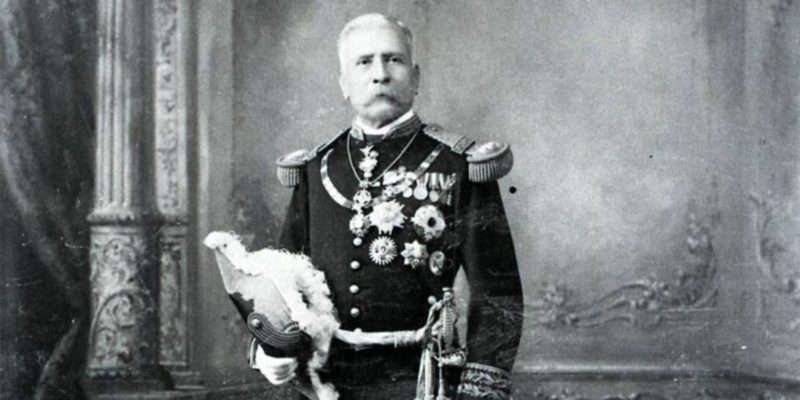
The main causes of the revolution were economic, social and political. First, it was An insurrection against the dictatorship of Porfirio Díaz who had occupied the presidency for 30 years and had been re -elected in the 1910 elections. This inspired an antirelectionist movement that brought together various groups that advocated the presidential alternation.
Secondly, it was an uprising against the great estates that promoted social inequality and kept the peasants in poverty. Some of the referents of the Revolution proposed agrarian reform and the consecration of labor rights to avoid abuse, both in the countryside and mines and in industries. There were also actions contrary to foreign capital interests, especially Americans.
History of the Mexican Revolution
Beginning of the Mexican Revolution
After governing for 30 years (the last 26 consecutively), Porfirio Díaz had said that he would not be a presidency candidate again . But in 1910 he presented himself to elections, he ordered his main opponent, the antirelectionist liberal Francisco I. Madero, and proclaimed himself winner.
This fact triggered An insurrection campaign against Porfiriato, known as San Luis Plan which was promoted by Madero and planned to start on November 20, 1910.
The result was not an immediate and unified insurrection, but A succession of armed uprisings In different parts of the Mexican nation, many of them starring peasants and headed by revolutionary leaders such as Emiliano Zapata, in Morelos, or Pascual Orozco and Pancho Villa, who took Ciudad Juarez in 1911.
These facts Forced the resignation of Porfirio Díaz (signed on the 25th of greater than 1911) and left the way to the presidency of Madero. However, military conflicts and insurrections continued throughout the decade.
The Presidency of Francisco I. Madero
After the resignation of Porfirio Díaz, they were held extraordinary elections that placed Francisco I. Madero in the presidency . This began to govern on November 6, 1911, but its moderate reforms did not please broad sectors that had supported the revolutionary process, especially peasants who yearned for agrarian reform.
Emiliano Zapata headed Revueltas supported by a manifesto at the end of November 1911, called Ayala Plan, who did not know the Madero government and claimed the return of the land to the peasants who worked them. Pascual Orozco also manifested against Madero.
Even The US government was discontent with the Mexican government both for its conciliatory position with some revolutionary groups that threatened the economic interests of the United States in the region, and by Madero’s decision to tax oil exploitation.
Finally, Madero was overthrown by one of his generals, Victoriano Huerta who joined a conspiracy of military related to Porfiriato supported by the US ambassador (this conspiracy subsequently received the name of “tragic dozen”). Huerta was proclaimed president on February 19, 1913 and Madero was killed three days later.
Victoriano Huerta’s presidency
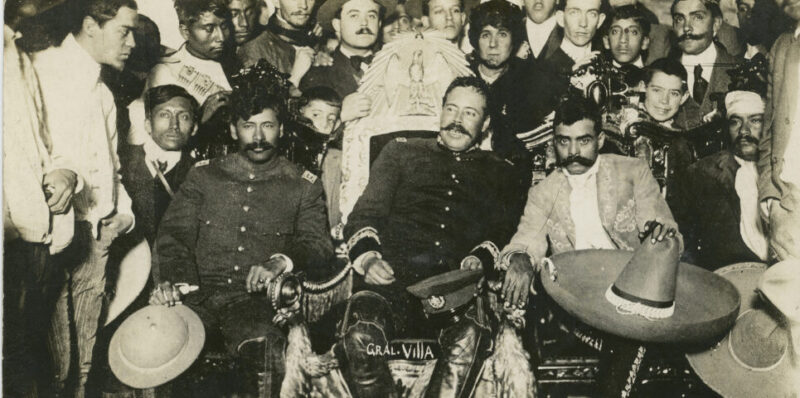
Huerta occupied the presidency between February 1913 and July 1914. He established a dictatorial regime that It had the opposition of various revolutionary and constitutionalist factions with the exception of those led by Pascual Orozco.
Venustiano Carranza signed the Guadalupe Plan that did not know the Government of Huerta, and organized the constitutionalist army to depose him. The revolutionaries Álvaro Obregón and Pancho Villa joined Carranza’s efforts in the north, and Zapata did it in the south . The new president of the United States, Woodrow Wilson, assumed in March 1913 and decided to support the constitutionalists.
The military triumphs of the Northern Division of Pancho Villa and the other forces of the Constitutionalist Army forced Huerta to resign and exile in July 1914. Carranza was proclaimed president As head of the Constitutionalist Army, with the support of Obregón, but Villa and Zapata opposed and proclaimed sovereign to a convention held in Aguascalientes that elected another president. Thus began a war between the constitutionalist army of Carranza and the conventionist forces of Villa and Zapata.
Venustiano Carranza and the Constitution of 1917

As of 1915, Villa’s troops suffered important defeats in front of the constitutionalist army . This also had the support of the United States, which is why Villa came to attack the town of Columbus, in New Mexico. This caused it to be persecuted not only for the Mexican Federal Army but also for US troops.
While becoming strong throughout the Mexican territory, the Carranza government convened a constituent congress that, In 1917, he proclaimed a new constitution . Carranza was elected constitutional president and consecrated through the Magna Carta some liberal principles but also social demands arising in the heat of the revolution:
- The separation between the Church and the State,
- Lay education, mandatory and free,
- the disqualification of presidential re -election,
- a series of labor rights,
- The state’s ability to exploit minerals and hydrocarbons and expropriate estates to fracture them.
During the constitutional presidency of Carranza, The Zapatista movement was defeated and in 1919 Zapata was killed . In the north, the villists were losing power and, after Carranza was killed in 1920, the interim president Adolfo de la Huerta offered Villa Lands for his men and a hacienda in exchange for retiring from political activity. Villa accepted. These facts marked the end of the Mexican Revolution. Anyway, the acts of violence continued, as demonstrated by Villa’s murder in 1923.
- Mexican Constitution of 1917
Consequences of the Mexican Revolution
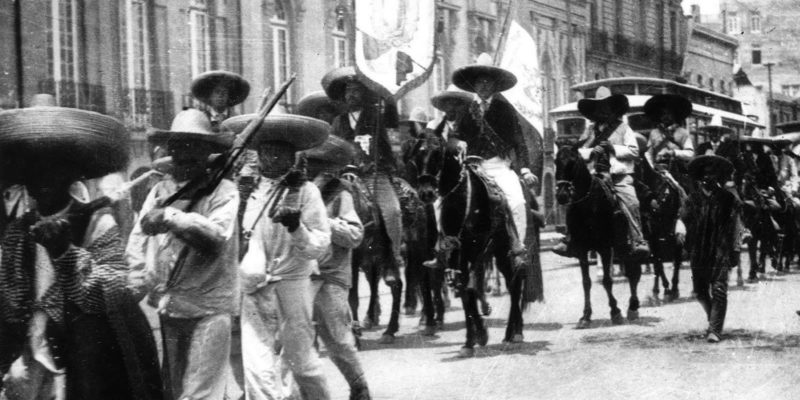
The military clashes and other acts of violence that took place during the ten years that the Mexican revolution lasted A very high death balance . To this were added the famines and diseases that were unleashed during the conflicts. In general, it is estimated that the victims exceeded one million people.
They also found death during the revolutionary process.
The end of the revolution did not end the acts of violence, but both the social and economic demands of the revolutionaries and the principles and rights enshrined in the Constitution of 1917 exerted their influence in the political activity of the following years.
One of the most important consequences of the revolution was the inclusion in the constitution of the agrarian reform, which was born from the demands of the most radical sectors . It consisted mostly of the state capacity to fractionate estates and distribute land among poor peasants. The constitutional recognition of labor rights was also important.
Anyway, the measures adopted They did not solve in practice the problems of poor and peasant populations . When the presidency Lázaro Cárdenas assumed in 1934, the problem of the distribution and productive capacity of the lands remained a large issue.
Commemorations of the Mexican Revolution
Each November 20 is celebrated in Mexico with a parade on the day of the revolution in commemoration of the date established in the San Luis Plan for the lifting against Porfiriato. In 2010, festivities were made by the centenary of the Mexican Revolution, simultaneously with the celebrations for the Bicentennial of the Independence of Mexico.
In different regions of the Mexican nation There are museums and monuments dedicated to the revolution as the monument to the revolution in Mexico City, the Museum of the Mexican Revolution in Puebla, or the Historical Museum of the Revolution in Chihuahua.
The Mexican Revolution in Art
The Mexican revolution has had a great influence on the art of the twentieth century. Many novels, films, paintings and architectural works They focus on this time to represent the history of Mexico or commemorate facts and characters from the past.
For example, The novels stand out Cartridge: stories of the fight in northern Mexico (1931), by Nellie Campobello either The death of Artemio Cruz (1962), by Carlos Fuentes. And movies like The Compadre Mendoza (1934) and Let’s go with Pancho Villa (1936), directed by Fernando de Fuentes; Those below (1976), directed by Servando González; either Long live Zapata! (1952), directed by Elia Kazan. In plastic art, the mural stands out From Porfirismo to the Revolution (1957-1966), by David Alfaro Siqueiros.
- Mexican National Shield
- Cardenism
References
- Knight, A. (2010). The Mexican Revolution. From Porfiriato to the New Constitutional Order. Economic Culture Fund.
- Von Wobeser, G. (coord.) (2014). History of Mexico. Economic Culture Fund.
- “Mexican Revolution” at https://www.britannica.com/
- The Mexican Revolution and the United States in the Collections of the https://www.loc.gov/