
We explain what the National Security Doctrine, its objectives and origin was. In addition, what were its characteristics and consequences.
What was the National Security doctrine?
The National Security Doctrine (DSN) was a body of ideas and practices of internal repression applied by the military governments of Latin America in the 1960s and 1970s . Some historians consider it a doctrine of foreign policy of the United States, because it was framed in Latin American alignment with the US block during the cold war since the Armed Forces received military aid from the United States government.
It emerged shortly after the success of the Cuban revolution and consisted of the use of the armed forces for the internal struggle against the progress of communism (and against other forms of political opposition). This sought the permanence of the American continent in the western or capitalist block. In discursive terms, this doctrine was presented as a defense of the nationality and values of the Christian West in the face of the threat of foreign ideologies such as communism and its “infiltration” in society.
While it was not officially formulated, the National Security Doctrine It was part of the principles that supported various military coup d’etats In Latin American countries, such as Brazil (1964), Argentina (1966 and 1976) or Chile (1973). The military chiefs of these countries agreed at a meeting of American armies in West Point in 1965 to repress the “internal enemy” through intelligence and counterinsurgency methods.
The National Security Doctrine included the Training in counterrevolutionary techniques developed by the armies of France and the United States and military assistance from the United States Department of Defense. In political terms, it became a justification for authoritarianism that characterized Latin American military dictatorships of the time and caused numerous human rights violations.
Key points
- The National Security Doctrine (DSN) was a body of repressive ideas and practices applied by the military governments of Latin America in the sixties and seventies.
- He had the military advice of the United States Department of Defense and was framed in the fight against communism during the Cold War.
- He implied the use of counterinsurgency tactics to combat armed organizations and caused human rights violation.
The origin of the National Security Doctrine
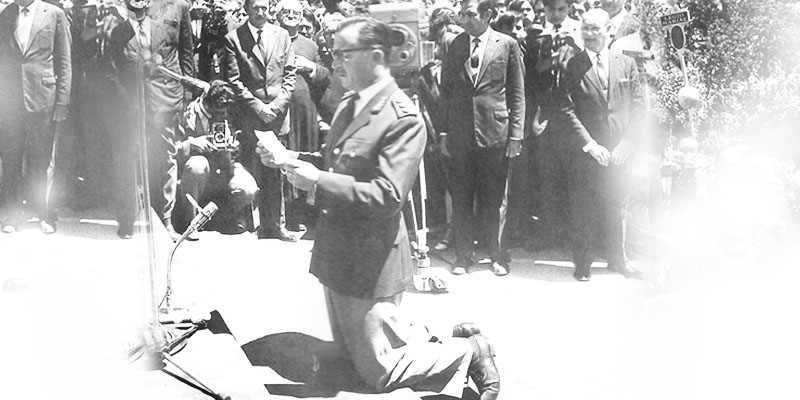
After the end of World War II In 1945, most of the world was divided into two blocks Faced with each other and led by the two great powers of the second half of the twentieth century: United States, which headed the western or capitalist bloc, and the Soviet Union, which headed the eastern or communist block. This confrontation was known as the Cold War.
In this context, both powers competed to exercise hegemony over Third World countries. The United States managed to maintain its predominance over Latin America when the Organization of American States (OAS) was created in 1948. Even so, in 1954 the CIA (American Intelligence Agency) contributed a coup against the president of Guatemala, Jacobo Affenz, who had implemented a series of reforms that affected the interests of US companies in the country.
The fact that more clearly He brought the cold war to Latin America was the Cuban revolution which triumphed in 1959 and gave rise to a communist government aligned since 1961 with the Soviet Union. The United States reaction was the support for an attempt to invas Cuban exiles to Bay of Cochinos (or Playa Girón), which ended in failure, and the creation of the Alliance for Progress, a program of economic aid to Latin American governments with the aim of avoiding the expansion of communism.
Another effect of the Cuban revolution was The emergence of armed organizations of Marxist or anti -imperialist inspiration in various Latin American countries which in the 1960s and 1970s used rural and urban guerrillas. This He encouraged the Latin American armed forces to organize a fight against insurgency and communism (and against everything they identified as the “internal enemy”) within their own borders. For this they had the United States military advice. This policy was called National Security Doctrine.
Objectives of National Security Doctrine
The main objective of the national security doctrine was Maintain the alignment of Latin American countries with the United States and strengthen internal order through The submission of armed organizations. The success of the Cuban revolution led by Fidel Castro in 1959 motivated the United States to offer military economic aid and assistance to Latin American countries that decided to put this doctrine into practice.
In Latin American countries, national security doctrine It was presented as an ideological struggle against communism . However, the idea that the sectors opposed to national, western and Christian values could be infiltrated in society led to repression to be directed against a broad social spectrum. This included both militants from armed organizations and intellectuals, teachers, students, workers, artists and journalists.
The military dictatorships that applied the National Security doctrine They also had an economic development objective . The Armed Forces considered that democratic institutions and civil freedoms were an obstacle to the fight against insurgency and for the application of an economic development program. For this reason, they replaced political personnel with technocrats (specialists responsible for applying economic measures and reforms based on their technical knowledge).
Factors that explain the emergence of national security doctrine
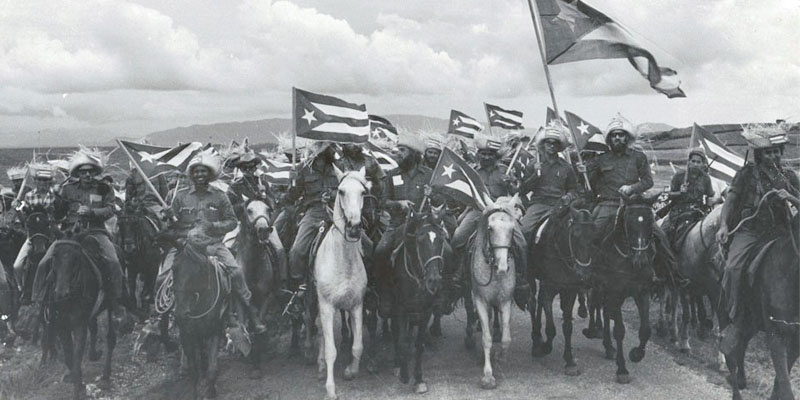
The national security doctrine arose as a result of a series of factors:
- The expansion of communism . The influence of the Soviet Union and Marxist ideas in some Third World countries grew in the fifties and sixty. Especially after the triumph of the communist revolution in China (1949), the independence of Indochina (1955), the beginning of the Vietnam War (1955) and the dissemination of Arab socialism. This was a threat to the western capitalist model promoted by the United States.
- The conception of Latin America as the “rear patio of the United States” . Since the nineteenth century, the US government applied the Monroe doctrine, which defended the United States law to intervene in Latin America when there was a threat or aggression of a European power, since this was considered a threat to the security of the United States. In this way, Latin America was characterized as the “rear patio of the United States.” Throughout the twentieth century, the political and economic order to maintain US influence in the region was attempted there.
- The emergence of guerrilla organizations . The triumph of the Cuban Revolution in 1959 and the establishment of a communist government in Cuba promoted the formation of armed organizations in the rest of Latin America. Generally inspired by nationalist, anti -imperialist or Marxist ideologies, they used guerrillas against the governments of their countries. The Latin American armed forces decided to confront them militarily and had the advice of the United States to apply counterinsurgency tactics. In Nicaragua, where the Sandinista revolution triumphed in 1979, the counterrevolutionary groups (called Cons) They received US financing.
- The defense of US economic interests . In addition to their geostrategic and ideological interests, the United States government sought to defend the interests of US companies that had a presence in Latin American countries. The experience of Cuba, where American companies were expropriated after the 1959 revolution, left a deep brand in the United States leadership, which considered a priority to support any initiative that avoids a similar situation in other countries.
Consequences of national security doctrine
One of the consequences of national security doctrine was The growing involvement of the United States in Latin America mainly through military aid to its armed forces. This aid grew from the reorganization of the School of the Americas in 1963, which from its headquarters in Panama provided training in irregular war tactics and counterinsurgency to Latin American officers.
Another consequence was The defeat of most armed organizations that practiced the guerrilla war in Latin America. This was the failure of the revolutionary left and abandonment, from the 1980s, of the generalized use of political violence, although in some countries (especially from Central America) there continued to be activity of armed groups.
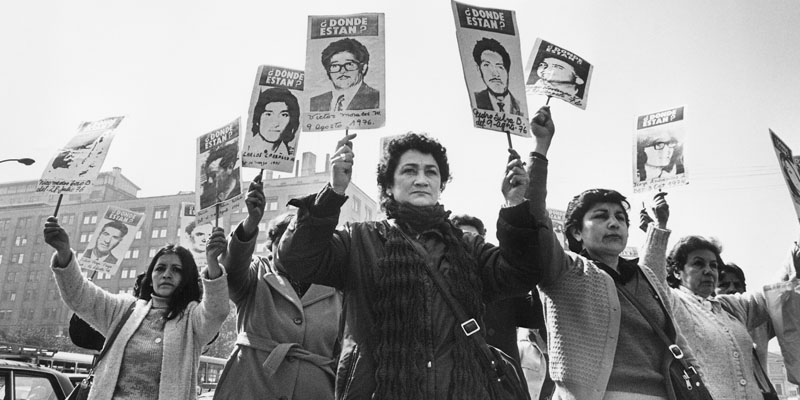
In addition, another important consequence was the violation of human rights in countries governed by military dictatorships and, in some cases, also by democratic governments influenced by this doctrine. In the countries of the Southern Cone that jointly coordinated repression (Brazil, Uruguay, Argentina, Chile, Paraguay and Bolivia), the revolutionary violence of armed organizations was answered with a systematic violence exercised from the State that led to the commission of crimes against humanity.
The repression applied by dictatorships such as Jorge Rafael Videla in Argentina, Augusto Pinochet in Chile, Alfredo Stroessner in Paraguay or Hugo Banzer in Bolivia included the persecution of various forms of political opposition and arrest, torture, murder and forced disappearance of thousands of people. With the arrival of Jimmy Carter to the presidency of the United States in 1977, there was some pressure to guarantee respect for human rights in Latin American countries. However, the claims remained dictated by dictatorial governments.
THE SCHOOL OF THE AMERICAS
The Américas School was a training center dependent on the United States Department of Defense whose objective was to provide specialized military instruction in counterinsurgency to Latin American officers.
He was born with the name of Training Center for Latin America in 1946 and was reorganized and renamed as a school of the Americas in 1963. He worked in Panama from its foundation until 1984, when he moved to the city of Columbus, in the state of Georgia, and changed his name. It is currently called the Western Hemisphere Institute for Security Cooperation.
Until 2000, in this institution More than sixty thousand officers from up to twenty -three Latin American countries graduated . Among them were some military accused of crimes against humanity for their activity during the years of dictatorships, such as Leopoldo Fortunato Galtieri, Emilio Massera and Manuel Contreras.
The Condor Plan

The Condor Plan, also known as Operation Condor, was A cooperation program implemented since 1975 by the Armed Forces of the Southern Cone countries (Argentina, Bolivia, Brazil, Chile, Paraguay and Uruguay). Its objective was to coordinate the illegal repression at the regional level and provide mutual assistance in the persecution of combatants of armed organizations and leftist militants.
The Condor Plan allowed to exchange information and collaborate in surveillance, arrest, transfer, torture or murder of people beyond national borders. It was part of the fight against armed militancy, the left and other forms of political and social organization that were identified as “subversive.”
According to various sources, this plan It was operated by the intelligence and secret police of the countries involved (such as the Argentine Side and the Chilean Dina) and was supported by the CIA of the United States. Some investigators also held the US secretary of state Henry Kissinger, who approved the struggle of Latin American dictatorships against the “leftist” sectors, but their relationship with the Condor Plan is a reason for debate.
The “Triple A”
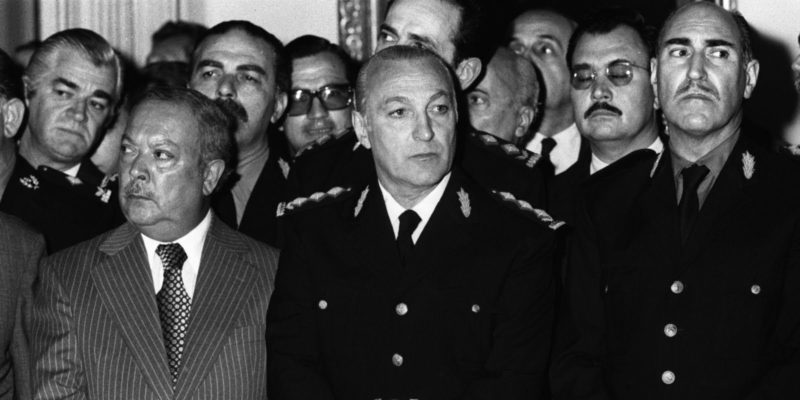
While the repression framed in the National Security doctrine was characteristic of military dictatorships in Latin America, also There were organisms that applied their methods during democratic governments . In Argentina, during the third mandate of Juan Domingo Perón (1973-1974) the Argentine Anti-Communist Alliance was created, better known as Triple A. It was a parapolational group that was in charge of the illegal repression of sectors considered “leftist” or “infiltrated”.
The triple A pursued and murdered militants of armed organizations (such as the Revolutionary Army of the People and Montoneros), trade unionists, artists, intellectuals, politicians and students identified with the left. It was clandestinely led by Commissioner José López Rega (Minister of Social Welfare of the Nation) and composed of characters such as the head of the Federal Police, Alberto Villar, formed in the French counterinsurgency doctrine.
It is estimated that throughout its years of activity Between 1973 and 1976, Triple A was responsible for the disappearance and death of between seven hundred and one hundred people . He stopped operating when the coup d’etat of March 24, 1976 took place that established a self-styled military dictatorship process of national reorganization (1976-1983), responsible for the disappearance of thousands of people.
Continue with:
References
- AA.VV. (1996). 20th century history. Salvat
- Bushnell, D. et al. (2023). History of Latin America. Britannica Encyclopedia. https://www.britannica.com/
- Larraquy, M. (2017). Argentina. A century of political violence. South American.
- Romero, La (2017). Brief history of contemporary Argentina 1916-2016. Economic Culture Fund.
- Zanatta, L. (2012). History of Latin America. From the colony to the 21st century. 21st century.


