We explain what pedagogy is, its history, types and characteristics. Also, how it is studied and its relationship with education.
What is pedagogy?
The pedagogy It is the science that studies education . The main object of its study is education as a socio-cultural phenomenon, so there is knowledge from other sciences that helps to understand the concept of education, such as history, psychology, sociology, politics.
The pedagogy has the function of guiding educational actions based on certain practices, techniques, principles and methods. Throughout history, there have been many pedagogues who have been in charge of proposing their own theories about pedagogy.
Pedagogy is associated with another science called andragogy, responsible for training people as permanent humans, taking into account their social and cultural experiences.
Origin of pedagogy
The use of methods and forms to transmit knowledge gives the idea that pedagogy, although not called as such, It has been present since the beginning of the communities . Greece and eastern civilizations such as Egypt and China were the first to establish methods and systematize access to knowledge.
The great Greek thinkers such as Plato, Socrates and Aristotle established in their writings the importance of assigning methods for the knowledge and study of certain disciplines. Access to education was a privilege of a small portion of both Greek and Roman society.
In the 17th century, Juan Amos Comenio laid some of the foundations of pedagogy in his work: “Didactica Magna”. There he exposes the importance of education in the development of children.
Also In the 17th century, the so-called “traditional pedagogy” emerged in France . Directed by the Jesuits, it highlighted the school as the main source of cultural and religious transmission within society. Traditional pedagogy is based on the transmission of knowledge by a teacher and is characterized by the passive role of the students.
Johann Heinrich Pestalozzi and Jean-Jacques Rousseau laid the foundations of modern pedagogy along with other thinkers of the 18th century. Both focused on the evolution of pedagogical methodologies.
They encouraged the development of teaching methods that put aside rigid education and memorization of concepts to make way for observation, experimentation and reasoning so that children can learn through experiences. In his work “Emile”, Rousseau highlighted the importance of education through awakening the child's interest and not discipline .
Starting in the 19th century, and throughout the 20th century, modern pedagogy focused on the teacher-student relationship and the development of students' abilities. Thinkers such as Johann Friedrich Herbart, John Dewey, María Montessori and Jean Piaget made notable contributions to different types of pedagogies.
Etymology of pedagogy
The concept of pedagogy comes from the Greek (paidagogeo), paidos meaning “child” and ago meaning “guide”. It is believed that the term refers to the first pedagogues of ancient Greece who were those slaves who had to take the children to school.
In the Royal Spanish Academy, pedagogy It is defined as the science that studies education and teaching which aims to provide sufficient content to be able to plan, evaluate and execute the teaching and learning processes, making use of other sciences.
Features of pedagogy
- It is a fundamental tool in educational planning .
- It uses methods and tools to transmit knowledge skills or values.
- Is studied by many thinkers who contribute their vision and approaches.
- It is applied at school, at home and in all areas in which the child develops .
- It can be from various types: some teacher-centered and others student-centered.
- Use knowledge and tools from various disciplines such as psychology, philosophy or sociology.
Types of pedagogy
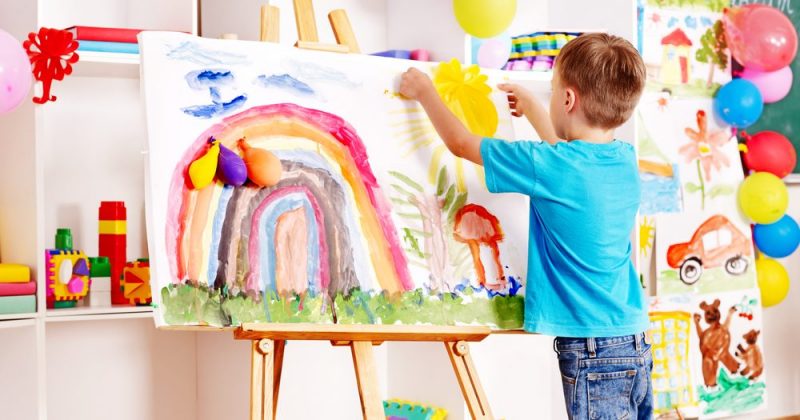
There are various types of pedagogies that vary according to their own characteristics or the area in which they are applied. Some of the most relevant are:
- Children's pedagogy. The object of study is the education of children. The growth stage of a child is very important, since it is when fundamental skills are acquired for the rest of life, which is why the work of educators is fundamental.
- Critical pedagogy. The main objective is to transform the traditional system and develop critical thinking in each of the students.
- Conceptual pedagogy. The main objective is to develop the thinking, values and skills of each student taking into account their age. This type of pedagogy is divided into: affective, cognitive and expressive.
- Social pedagogy. The main objective is to develop equal opportunities in access to education and put education at the service of the development of all individuals.
- Waldorf Pedagogy. The main objective is the education of a person, in their autonomy and freedom, and takes into account the creative and artistic capacity of each person. This pedagogical model was created by the founder of anthroposophy, Rudolf Steiner, and is structured in three levels: the first covers children up to six years old and activities that focus on the development of the senses and corporeality; The next is for children from seven to thirteen years old, at this level the discovery that each of them has about the world is taken into account; The last level goes up to twenty-one years of age, and that is when autonomous thinking and understanding develop.
- Psychopedagogy. The main objective is to study the psychological processes that occur during learning. It arises from the union of pedagogy and psychology, and is usually developed and implemented most frequently in learning disorders and vocational guidance. Currently, many educators turn to psychopedagogy to correct and guide on issues related to learning difficulties, in such a way that this science directly helps them develop a better compression process and provides tools that will be very useful to them. for your future.
Pedagogy career
There are many options when it comes to studying pedagogy at university. Depending on the university, studies are offered in different ways and under different names, approaches and study plans.
One of the most common careers in the field of pedagogy is that of “Educational sciences”. It is the university degree in which educational phenomena are studied from different points of view and is offered in many public and private universities around the world.
On the other hand, Psychopedagogy is another discipline that is studied as a bachelor's degree in universities in various countries, combining knowledge and methods of psychology applied to pedagogy.
Pedagogy and education
The concept of pedagogy is often confused with that of education, but to understand pedagogy you must first correctly understand the concept of education. Education is that training that is given to an individual or group of individuals with a view to developing their intellectual, moral or emotional capacity.
Pedagogy has its roots in education since it arises from the need to systematize and create methods for access to education, that is, methods for the transmission of knowledge, traditions, values or culture.
Both concepts are closely related, possibly both disciplines have emerged simultaneously in the first civilizations. Pedagogy is a set of methods and resources to put the educational process into practice .
References
- “Conceptual pedagogy: objectives and their theoretical bases over time” in Palabra Maestra.
- “Pedagogy: what educators need to know” in Top Hat.
- “From social pedagogy as education, to social education as pedagogy” in Scientific Electronic Library Online.
- “Pedagogy” on Wikipedia.