We explain what production is, its characteristics, factors and why it is important. In addition, we tell you what the production process is.

What is production?
In economics, production It is the process by which raw materials are transformed into goods for consumption, and value is added to the result (i.e. added value). Economic systems have as their goal the production of resources, since through this different human needs are satisfied.
So when talking about production, from an economic point of view, reference is made not only to the creation of new consumption objects, but also of resources destined for services . In fact, the bulk of production in industrialized countries is dedicated to this sector of the economy. Therefore, all those economic activities that are different from consumption can be considered part of production.
Companies and organizations, countries and even entire regions refer to production to measure their economic activity. Each of these entities has a specific production capacity, determined by its productive factors and the management of them.
Definitions of production
The word “production” comes from the Latin verb I will producetranslatable as “to engender,” and is composed of the voices pro (“forward”) and ducere (“guide”). It is a term commonly used in Roman Antiquity, whose economic connotations arose later, from the birth of economic philosophy. Different authors and scholars of the subject have defined this term throughout history, for example:
- In the 19th century, the German philosopher Karl Marx understood modes of production as the way in which human beings have historically organized themselves to satisfy their needs that is, to produce, and have been determined by the interaction between the labor force and the possession of the material means of production (such as factories, machines, tools, etc.).
- Louis Tawfik and Alain Chauvel scholars of production administration, define it as “…the addition of value to a good (product or service) as a result of a transformation” and affirm that “to produce is to extract or modify goods in order to make them suitable for satisfying needs.” .
- According to J.L. Riggs in his book Production systems (2001), production must be understood as the generation of useful goods and services that is, products with added value.
Production features

In general terms, production is characterized by the following:
- Its purpose is to transform the raw material in consumer goods, adding value in the process.
- All productive process requires land, labor, capital and technology .
- The way in which a good is produced depends on the production system used and the availability of the resources necessary for it.
There are different types of production, such as:
- Artisanal production when individual and unrepeatable goods are produced, using a traditional method that generally involves few workers.
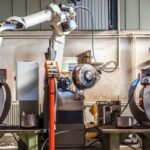
- mass production when identical goods are produced in a massive and rapid manner, implementing sophisticated machinery and electrical energy.
- Intermediate or batch production when a finite batch of similar or identical goods is produced intermittently, generally because there is no constant demand to supply.
- Continuous or continuous flow production when it is produced uninterruptedly, 24 hours a day and 7 days a week, generally goods of key importance for the country or region.
Importance of production
The production It is essential to satisfy human needs whether it is growing food or making clothing to cover the body. In this sense, production has existed since the origins of humanity, although it has not always occurred in the same way, nor through the same mechanisms, nor with the same efficiency. Therefore, if there was no one capable of producing the goods necessary to live, they could not be acquired in any way and each person would have to produce the essential inputs to guarantee their existence.
On the other hand, the production has been central in the organization of economic systems and nations what the philosophy of Marxism called the “modes of production”: socialist, slave, feudal and capitalist. This means that for Marxism, production and the struggle for its control in society has motivated the changes in human history. This is what is known as the “class struggle.”
The production process
The production process, also called productive chain either production chainis a set of actions and processes that occur in an organized, successive and planned manner to transform raw materials into goods of consumption. In other words, it is the set of concrete and step-by-step actions that translate into production, from the initial stages of obtaining the raw material to the marketing of the produced good in the hands of the consumer.
Broadly speaking, the production process includes the following stages:
- Analytical or collection stage . In this initial stage, raw materials are gathered and considerations are made regarding the order of transportation and storage, before proceeding to prepare the material resources to undertake their transformation. Usually the raw material is reduced to small, more manageable segments.
- Synthesis or production stage . This intermediate stage is the production stage itself, that is, the treatment and transformation of the raw material into the finished or semi-finished products that you want to market. In this stage, quality standards, observation of the environment and other variables of the production procedure intervene, in which machines, physical-chemical procedures and/or organized manual work normally intervene.
- Conditioning or processing stage . The final stage of the circuit is mainly dedicated to the marketing aspects (distribution, promotion, sale), the purpose of which is to bring the produced good to the consumer who needs it. The final price of the product is, in some way, a reflection of the additional value that the raw material gained throughout this process. Once the consumption of the good or service has taken place, the circuit can be considered closed and a new production cycle can begin.
Factors and production capacity
The key elements involved in any production process are known as factors of production, and there are normally four of them:
Land
Originally, the meaning of this factor was, literally, an area of land in which to plant. However, today the modes of production have changed and when we talk about “land” we refer to the set of materials and forces available in nature and usable by humans such as water, heat, energy, light, as well as raw materials. These resources can be classified into two:
- renewable resources when nature can replenish them faster than they are consumed by human productive processes, or when they are so abundant that their extinction is not a problem.
- Non-renewable resources when nature cannot replenish them at the necessary rate so that they do not run out and become extinct, which is why they are considered more or less scarce resources, whose end is foreseeable in the medium or long term.
Job
“Work” means any type of effort, physical or mental, necessary to transform raw materials into consumer goods . It is an indispensable factor for production, and is directly related to the capabilities of human beings. Furthermore, work is the only factor that connects the rest to each other. The work can be classified into:
- physical work or mechanic when it involves the effort of the human body, either directly or through more or less sophisticated tools.
- Intellectual or mental work when it involves the effort of the human mind, in a creative or applied way, through knowledge and knowledge.
Capital
Capital refers, in principle, to money used to acquire resources and services necessary for production as well as, in general, to the latter goods and services that contribute to the creation of the final product. Capital involves two different types of assets, which are:
- Fixed capital that is, the tangible and intangible elements that constitute part of the productive enterprise, such as machines, their software, the physical structures where production occurs, among others.
- Working capital that is, the money or resources necessary to start the productive circuit, generally consisting of cash (or the possibility of financing in some way) and a stocks initial raw materials.
Technology
Technology is a key factor for production in contemporary times, since it allows humans to transform matter to obtain new materials and at the same time develop new productive procedures, in a positive feedback loop driven by scientific and technical knowledge . Like capital, technology is a facilitator of the production process, and encompasses both the tools developed by humans and the knowledge acquired through the study of reality.
Depending on the availability of these four factors in a production circuit, there will be more or less productive capacitythat is, more or less can be produced. When a production system reaches its maximum capacity, it is unable to increase its results if the factors necessary for this are not increased to some extent.
Production examples

All individuals in a society contribute, in one way or another, to the production of the goods necessary to live. Some do it directly, that is, with their work, while others are in charge of producing the goods necessary to allow the production of others. Examples of this are:
- Agricultural production that is, the planting, irrigation and harvesting of food on arable land, using machines (tractors, plows), technology (genetically improved seeds) and work (farmers, collectors and operators of tractors and other machines).
- Industrial production of intermediate goods that is, goods necessary to finish other products in other factories, such as metal sheets: a steel mill gathers raw material (aluminum ore), processes it and melts it at high temperatures, and then shapes it into sheets that They will be purchased by different aluminum industries: can factories, keychain factories, construction companies, among others. For this, the steel company uses heavy machinery, specialized workers and a lot of energy to heat the metals to the melting point.
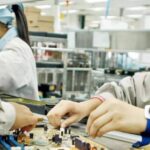
- The manufacturing of consumer goods as is the case with cell phones: a process that involves a complex circuit of machines and computers to assemble different components, often previously manufactured by other industries. Using electrical energy, the work of operators and other necessary inputs, cell phones are mass produced and then put on the market and distributed in stores.
Gross domestic product
The Gross Domestic Product or Gross Domestic Product (represented with the acronym GDP or PBI) It is an index of productivity (and therefore economic activity) referred to a country or a geographic region . Through the calculation of GDP, the level of macroeconomic activity of nations can be compared and measured: the greater the activity, the higher the index, usually expressed in millions of US dollars.
The calculation of GDP is carried out by adding all the goods and services produced by a country or a region in a given period (usually one year). It is a complex calculation, in which some factors considered non-productive or impossible to quantify (such as self-consumption goods) are not taken into consideration, and once a figure is obtained, it is compared with the equivalent figure from the previous period, to thus knowing whether the economy grew (GDP increased), stagnated (GDP is the same), or contracted (GDP decreased).
References
- “Gross Domestic Product” on Wikipedia.
- “Etymology of Produce” in the Online Spanish Etymological Dictionary.
- “Production” in Filosofía.org.
- “Production process: what it consists of and how it is developed” at EAE Business School.
- “What is production (economics)?” (video) at Audioversity.
- “Productivity (economics)” in The Encyclopaedia Britannica.