
We explain what a scale is and how it is used in technical drawing, physics and geography. Also, musical scale and economy of scale.
What is a scale?
Scale is a term that designates a multitude of different things. The word comes from Latin scale (“staircase”) and from the Greek skála (“port”), two meanings that are still found in the background of their modern meanings, within disciplines as different as physics, geography and music.
Indeed, a stopover is a short staircase or a place to dock ships or airplanes, according to the dictionary of the Royal Spanish Academy. However, its most relevant meaning is a “ordered succession of different values of the same quality ”.
In certain disciplines a scale It is a way of organizing certain information in a hierarchical way following a specific order. For example:
- The scale of chromatic values arranges colors from one side of the spectrum to the other.
- The scale of a map represents the distance conversion from largest (actual size) to smallest (figured size on the map or graph).
- The musical scale orders the musical notes according to its nature.
The same happens in other specific fields, which we will see separately below.
Scale in technical drawing
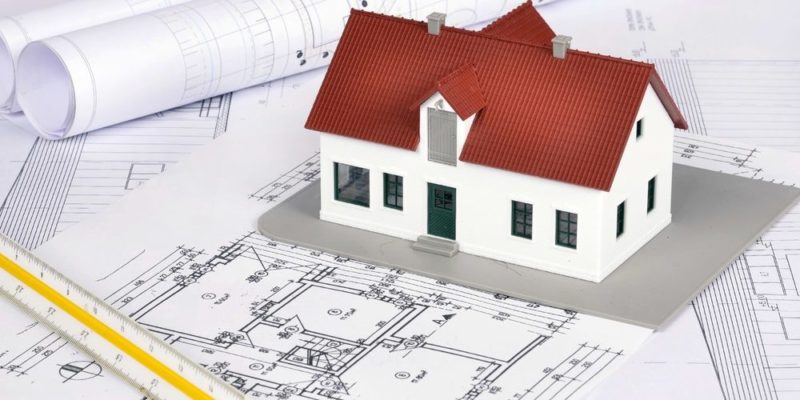
In technical drawing and other forms of illustration and graphic representation, the scale of representation is a key concept: it is about the necessary equivalence between drawing and reality .
Thanks to it, the objects represented retain their proportions, that is, so that the drawing does not distort the shape of the original object, or the plane does not distort the real distances between one thing and the other.
The representation scales are determined by the equation:
Scale = drawing measurement / actual measurement
So they are expressed as a division ratio, in terms of X/Y or X:Y, meaning that Thus, a 1/500 scale plan will represent 500 real centimeters in 1 drawn centimeter, that is, five meters.
These scales They can be of two types: reduction and expansion depending on whether the representation exercise they do tends to the first or the second. Thus, a scale of 1/50,000 is a scale that reduces 50,000 cm to 1, while a scale of 2/1 increases each real centimeter by 2.
Scale in geography

In geography, especially cartography, the scale It is a fundamental concept for the representation of space and proportion . In maps, plans, designs or diagrams, the real size of things would be impossible to represent without adhering to certain conventions, similar to those in the previous case.
Thus, when representing a building on an urban map, for example, it will be essential to use a scale, expressed in the same previous terms: X:Y, in which X will be the figurative size, represented with the number 1, and Y will be the actual size of the object.
Thus, for example, 1:1 would be the real scale (which is impossible on a map), that is, the object in its real proportions, since each 1 real centimeter is equivalent to 1 figurative centimeter; but 1:500 would mean that each figurative centimeter represents 500 centimeters of the real object; and 5:1000 would mean that every 5 figurative centimeters is equivalent to 1000 reais.
The scale proportion is usually noted on cartographic maps somewhere, to know how many kilometers each centimeter of the map is equivalent to, and we can understand the distances, sizes and proportions. These scales are regulated, standardized and universalized in accordance with professional agreements on the subject.
Scale in physics
In his attempt to explain natural phenomena, To measure and represent its results, physics requires a specific scale . Thus, there are scales to measure temperature (Celsius, Fahrenheit, Kelvin), seismological scales (Richter, Mercalli, etc.), and equivalents for pressure, frequency, voltage, radioactivity, etc.
These scales They are known as measurement scales. and they can be of various types, depending on the units they use: logarithmic, hexadecimal, etc.
Economy of scale

The term “Economy of scale” has to do indirectly with the concepts that we have seen before, since it refers to the situation of a company or organization that reduces its production costs the greater the quantity of product manufactured since you obtain a greater profit per finished unit.
This situation usually occurs when there is accumulated and usable raw material, or when the company purchases more facilities, since the investment in machinery is compensated by an increase in production.
In these situations, The higher the production, the lower the unit cost of the product. . This is where the scale effect occurs: in that a criterion similar to that of representation scales is applied to this type of calculations:
Unit cost = Machine cost / number of products manufactured.
Economies of scale usually last up to a limit, which is when the company reaches a certain size and begins to become more expensive to manage, administratively and bureaucratically speaking.
musical scale
For its part, the musical scale is nothing more than the succession of musical sounds (known as notes), within a limited set, from which music or a melody can be made.
Thus, the musical scale serves to decompose any melody into the notes that compose it but also to organize sounds according to a hierarchical, sequential and structural criterion.
Musical scales can be of different types, depending on how many notes they comprise: pentatonic (5 notes), hexatonic (6 notes), or the one used in most Western music, the heptatonic or diatonic, composed of 7 notes: C, re, mi, fa, sol, la, si. There is also the twelve-note scale (12 notes) or chromatic scale, widely used by avant-garde musicians.
References
- “Scale” in the Language Dictionary of the Royal Spanish Academy.
- “Scale (cartography)” on Wikipedia.
- “What is the cartographic scale?” (video) on IGN Argentina.
- “Normalized scales” in DiseñoTecnico.com.
- “Scales of representation” in Xunta de Galicia.
- “Scales” in Physic Education.
- “Economies of scale” in Economipedia.


