We explain what space is according to its different meanings: physical, exterior, geographic space, and its relationship with time.

What is space?
It is not easy to explain what space is, since it is a term that can have many and very different meanings depending on the accompanying context. The word space comes from Latin spatiuma term with which ancient philosophers named the matter, terrain or time that separates a point A from a point B.
Its first definitions in the Dictionary of the Spanish Language point to terms such as “extension”, “distance”, “capacity” or “course”, since basically We understand by space a proportion or relationship .
Thus, space is the portion of the world that a given body occupies, and that cannot be occupied at the same time by any other body. Space is also the distance between one thing and another, or even the period of time between one event and a different one.
At the same time, we call the entire universe outside our planet space. We also give the term other specialized uses, such as geographic space.
All of these meanings are true in their context and merit a separate explanation, which we will explain below.
Physical space
The physical space is the place occupied by an object in the universe, conceived based on the three usual linear dimensions: height, width and depth. In that sense, space is a key concept for the physical understanding of the universe.
It is mathematically calculable and questioned by contemporary physics. Its relationship with time has been known since ancient times, but it was fully developed in the 20th century by Albert Einstein, as we will see later.
In classical mechanics or Newtonian mechanics, space constitutes one of the elemental magnitudes of the universe which is not definable through other similar magnitudes (such as time, mass, etc.).
Space and time
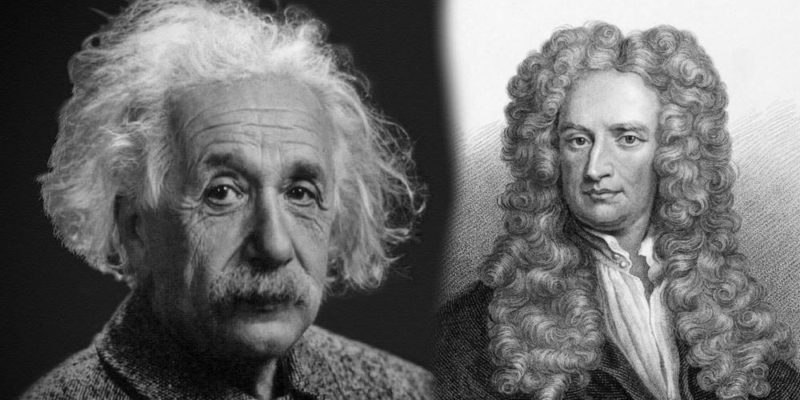
The relationship between space and time occupied a central place in the philosophy of the 17th century . For this reason, great thinkers such as the English physicist Isaac Newton (1642-1727) and the German philosopher and mathematician Gottfried Leibniz (1646-1716), developed very dissimilar theories to understand it.
Newtonian mechanics understood space and time as absolute values . This is how classical mechanics was founded, which has survived to this day. This conception changed with relativism in the 20th century, whose most famous name is Albert Einstein.
Although there had already been attempts to overcome traditional geometric considerations of space, through non-Euclidean geometry, it was not until 1905 that this new way of understanding the link between space and time appeared.
Albert Einstein's theories maintained that neither of these two magnitudes is really absolute, but rather depends on the observer's point of view. In this Theory of Special Relativity, Einstein proposed that time and space made up a single construct: the space-time the fabric of which the universe is composed.
Outer space

The concept of outer space arises with the possibility of knowing the universe beyond our planet. outer space It is the vast expanse of void between the end of the atmosphere and the beginning of that of other planets distant.
It is called “exterior” in contrast to the interior space of the planet. This space, however, is not really empty of matter or energy, but it contains an extremely low density of particles (especially hydrogen) and electromagnetic waves.
The exploration of outer space was limited for many centuries to observation through telescopes. Only in the 20th century were the first objects able to be put into orbit.
Besides, In 1969 the first astronauts arrived on the Moon, beginning the physical and technological exploration of outer space. by launching space probes and, later, unmanned missions to Mars and other planets.
Geographic space
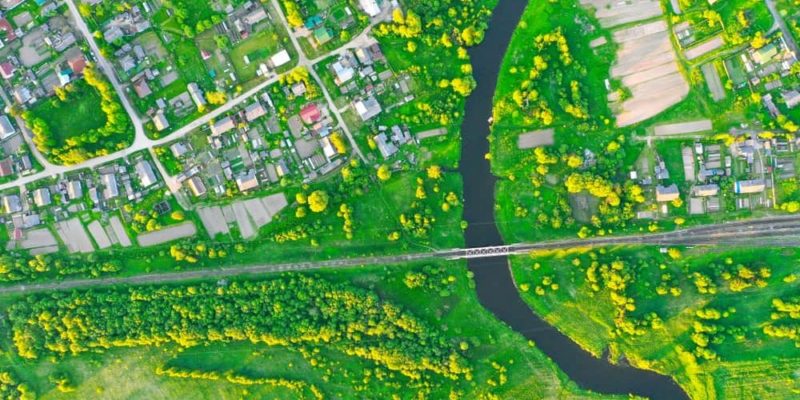
For its part, the concept of geographical space belongs to the field of geography. It is the same physical space, but ordered by human society . That is to say, it involves a look at human society from a spatial point of view.
The geographical space is divided into landscapes : each one according to the order of things that one wishes to perceive. One can thus speak of natural landscape, urban landscape, rural landscape, etc.
References
- “Space” in the Language Dictionary of the Royal Spanish Academy.
- “Space (physics)” on Wikipedia.
- “Space” on Wikipedia.
- “Geographical space” in Wikipedia.
- “Space-time” on Wikipedia.
- “Space (physics and metaphysics)” in The Encyclopaedia Britannica.