We explain what the Spanish Empire, their territories and the dynasties that ruled them were. In addition, its characteristics and its end.
What was the Spanish Empire?
The Spanish empire was the set of The territories in Europe, America, Asia, Oceania and Africa that remained under the control of the Spanish crown between the 16th and 19th centuries . It emerged following the territorial expansion of the Catholic Monarchs at the end of the 15th century, which included the arrival of the first European ships to America in 1492. At the beginning of the 16th century, During the reign of Carlos V, the Empire was extended with the union of the territories of the Holy Roman Empire and the conquest of the Aztec and Inca empires.
Under the reign of Felipe II, successor of Carlos V, the territories of the Holy Empire separated from the Spanish crown. However, Portugal was annexed with its colonial domains in Brazil, Africa and Asia. This considerably expanded the extension of the Spanish Empire (considered an empire “where the sun was never set”) and consolidated the Spanish monarchy as a commercial and military power. In the sixteenth century also began the Spanish Golden Age, a stage of splendor in art and literature.
The administration of the Spanish empire in America, Asia and Oceania (territories known as “Las Indias”) was based on the Establishment of viceroyalty, general captains, governorates, audiences, councils and, since the 18th century, intendances and in institutions such as the Council of the Indies and the Hiring House, in addition to other agencies and officials.
During the reign of the minor Austrias in the seventeenth century, and After the signing of the Utrecht treaty at the beginning of the 18th century, Spain lost all its imperial territories in Europe while England became the hegemonic power of the moment. However, the Spanish monarchy retained the monopoly of commerce with its colonial territories in America during the reign of the Bourbons in the 18th century.
The crisis of the Spanish Empire broke out at the beginning of the 19th century, when the Napoleonic invasion of Spain promoted revolutionary movements in America that in a few years led to the independence of the ancient viceregal territories. Spain lost its last colonies in America and Asia (Cuba, Puerto Rico and the Philippines) at the end of the 19th century . In Africa, the Spanish State maintained colonial territories until 1975.
Frequent questions
What territories were part of the Spanish Empire?
The Spanish empire covered territories in Europe, America, Asia, Oceania and Africa. During the union of the crowns of Spain and Portugal (1580-1640), the Portuguese Empire possessions of the Portuguese Empire were also part of the Spanish Empire. The imperial territories in Europe, such as Naples, the Spanish and others, were lost between the seventeenth and early eighteenth century.
How many years did the Spanish empire last?
The Spanish Empire lasted four hundred years, if the European discovery of America in 1492 is taken as the beginning and as an end the loss of the latest Spanish colonies in America and Asia in 1898.
Why did the Spanish empire fall?
The Spanish Empire disintegrated shortly after the Napoleonic invasion of Spain in 1808. This invasion caused the arrest of King Ferdinand VII, the appointment of Napoleon’s brother as king of Spain and the ignorance of the legitimacy of this new king by many peninsular and Creole Spaniards. This triggered the independence processes in America.
Why was the Spanish empire important?
The Spanish Empire was the first global empire in history. This means that their territories were on different continents separated by oceans. The global extension of the Spanish Empire encouraged the globalization of the economy and spread cultural guidelines such as Spanish language and Catholic religion.
Origin of the Spanish Empire
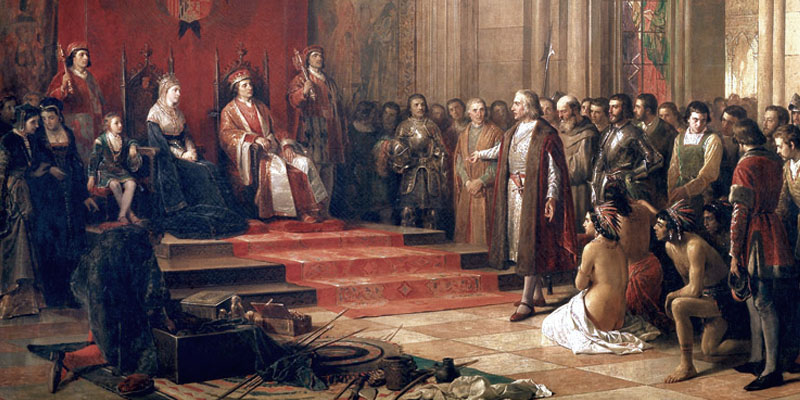
The Spanish empire was born after the dynastic union of the crowns of Castilla and Aragon which took place at the end of the 15th century due to the marriage between Isabel I of Castilla and Fernando II of Aragon, known as the Catholic Monarchs.
Throughout his reign, which concluded with the death of Fernando II in 1516, the Catholic Monarchs managed to unify most of the Iberian Peninsula. This included the conquest of the last Muslim state in the region (the Nasrid kingdom of Granada) in 1492 and the annexation of the kingdom of Navarra in 1512. They also carried out an expansionist policy which allowed the conquest of the Canary Islands, the occupation of some areas in North Africa and the incorporation of territories disputed with France, mainly the kingdom of Naples.
The other key event of the reign of the Catholic Monarchs was the decision to grant resources to the navigator Genoese Christopher Columbus to explore a commercial route to the East. Columbus’s trip led the European discovery of America in 1492.
Thus began a period of conquest, evangelization and colonization of the American territories that made Spain an immense empire at the beginning of the 16th century, especially after the conquest of the Aztec and Inca empires during the reign of Carlos V. The expansion subsequently extended to Asia and the Pacific, with the conquest of the Philippines under Felipe II.
Dynasties that ruled the Spanish Empire
The Spanish empire was governed by three successive monarchical dynasties:
- The Trastámara . It was the dynasty of Spanish origin to which the Catholic Monarchs belonged, whose expansionism led to the formation of the Spanish empire. The last sovereign of this dynasty was Juana I of Castile, nicknamed “La Loca”, who died in 1555. However, since Juana remained locked up for reasons of mental instability since 1509, her son King Carlos I of Habsburg’s house was the true ruler since the death of Fernando the Catholic in 1516.
- Habsburg . Also known as the Austrias, it was the dynasty that reigned in Spain from 1516 to the death of Carlos II in 1700. This period is divided into two stages: the major Austrias (Carlos I and Felipe II), who expanded and consolidated the Empire throughout the 16th century, and the minor Austria Europe but they retained the Spanish colonies in America and the Philippines.
- The Bourbons . They were kings of Spain from 1700 to the present (with some interruptions in the nineteenth and twentieth centuries). His first monarch was Felipe V, who claimed the right to the throne in 1700 and was recognized after the Spanish War of Succession (1701-1713). The Treaty of Utrecht (1713) determined the loss of the latest territories of the Spanish Empire in Europe, while Bourbon reforms generated a more direct control of the crown over the American territories. The Empire entered into crisis at the beginning of the 19th century, when the French army invaded Spain and in Latin America triumphed independence movements. The Bourbons lost the last colonies in America and Asia in 1898.
Territories conquered by the Spanish Empire
The Spanish empire was one of the most extensive empires in history. At the end of the 18th century, it reached 20 million square kilometers .
The main territories that integrated it in America, Asia and Oceania, not counting the Portuguese possessions during the union of both crowns between 1580 and 1640, were:
- In America:
- He New Spain Viceroyalty (1535-1821) . It covered the territories of the current Mexico, part of the United States (California, New Mexico, Arizona, Texas, Nevada, Florida, Utah, Louisian Rico, Trinidad and Tobago, Guadalupe and other islands, some of them lost to other empires), the current territories of Guatemala, Nicaragua, El Salvador, Belize, Honduras and Costa Rica, and the Philippines, Carolinas and Marianas in Asia and Oceania.
- The Viceroyalty of Peru (1542-1824) . He covered the current territories of Peru, Colombia, Argentina, Ecuador, Panama, Chile, Bolivia, Paraguay, Uruguay, and parts of Brazil and Venezuela. However, its territory was diminished from the 18th century with the creation of two new South American viceroyalties:
– The Viceroyal of New Granada (1739-1819) . Originally created in 1717 but suspended between 1723 and 1739, he covered the territories of the current Panama, Colombia, Ecuador, Venezuela, the north of Brazil, the West of Guyana and the Trinidad Island.
– The Viceroyalty of the Río de la Plata (1776-1811) . It covered the current territories of Uruguay, Bolivia, Paraguay, much of Argentina and southern Brazil. It included the Annobón and Bioko Islands in the Gulf of Guinea (in the center-west of Africa).
- In Asia and Oceania:
- The general captaincy of the Philippines (1565-1898) . He covered the Philippines and the Caroline and Marian islands in the Pacific Ocean.
Economy and Society in the Spanish Empire

The Spanish Empire was largely based on the extraction of resources from its colonial territories such as the gold and silver of Mexico and Peru, which were sent in mercantile fleets to Europe. The vessels that transported them used to be attacked by pirates and privateers encouraged by the enemy powers (such as England, France and the Netherlands), which motivated the use of war ships to escort merchant ships.
In the territories of the Spanish empire, agricultural products were also obtained, as in the Caribbean region, rich in Tobacco plantations, sugar cane, coffee, cocoa and other species. These plantations They used to be worked by slave labor from Africa which was also used in mining and artisanal production. Agricultural and livestock farms in America were also worked by indigenous labor.
The colonial society was organized in estates based on the place of birth and offspring. This social structure is known as “caste system.” The groups that were part of the caste system were:
- The “White” . They were peninsular Spanish (born in Spain) or Creoles (born in America), which constituted the privileged elite and were engaged in trade or occupied the functions of government and administration.
- The “Indians.” They were indigenous populations of the colonial territories, subject to the authority and economic exploitation of the “whites”, especially in agricultural estates and mines.
- The “Blacks” . They were individuals taken to America from Africa and their descendants. They were sold as slaves and subject to heavy works in plantations and mines or dedicated to domestic service and artisanal works.
- The “mestizos” and other castes. They were descendants of the union between a man of one estate and a woman of another. To refer to these “mixtures”, the generic term “castes” or specific words for each type of miscegenation was used. For example, the “mestizos” were descendants of a Spaniard and an indigenous woman, the “mulatto” descended from a Spanish person and a “black” person, and the “zambos” of a “black” person and an indigenous person.
Spanish Empire Administration
The Spanish Empire established A viceregal system that treated its colonies as extensions of the metropolis . The main agency for the administration of possessions in America and the Philippines was the Council of the Indies, and the issues related to colonial trade were managed by the hiring house, both located in Spain.
The administrative structure of the Spanish Empire In the colonies it was based on a series of territorial divisions and government institutions :
- Viceroyalty. They were governed by a viceroy, which was the maximum authority in that territory and responded directly to the metropolis, as it was appointed by the king and ruled in his name.
- Hearings They were in charge of the administration of justice in the viceroyalty and general captains. They were made up of judges called “listeners” (who could replace the viceroys in case of disease or death) and other officials.
- General Captainies. They were subject to the viceroyalty and were political divisions by a general or governor captain who directed the military forces and jurisprudence, especially in areas of strategic interest for the crown that required a leader with defense and war skills.
- Cabildos They were assemblies or councils in charge of the city government and its surroundings. They had functions such as fiscal control (budgets, income, tariffs), justice and the execution of judicial decisions in minor matters, police surveillance and the supply of the city. Its main officials were the mayors, the councilors, a senior sheriff, a real Ensign and a faithful executor.
- Intentions They were established with the Bourbon reforms of the 18th century, and implied a more direct control of the crown on the administrative and finance decisions of the territories in which it appointed mayors.
A central aspect of the conquest and colonization of the Spanish territories in America It was the evangelization of its indigenous inhabitants, in charge of religious orders Like the Dominicans, the Mercedarians, the Franciscans and, subsequently, the Jesuits. Of special importance were the Jesuit missions (also called “reductions”): indigenous towns administered by priests of the Society of Jesus.
Crisis and end of the Spanish Empire
He Spanish empire began to lose territories in the seventeenth century like the north of the Netherlands and Portugal. These losses were deepened with the Utrecht treaty signed in 1713, whereby Spain lost the rest of its imperial territories in Europe. However, this did not affect its American and Asian colonies.
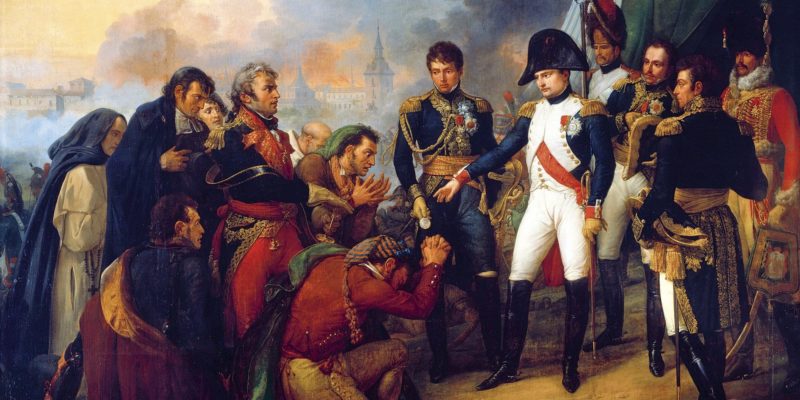
Although in the 18th century the Spanish empire was overcome as an international power by England, The final crisis It occurred in the nineteenth century, after the invasion of Spain by the Napoleonic troops . Once deposed and Made prisoner King Fernando VII in May 1808, Napoleon’s brother, José Bonaparte, was crowned as king of Spain. Simultaneously, a Central Supreme Board was formed (then replaced by the Regency Council) that did not know the authority of the new king and began the Spanish War of Independence against the French (1808-1814).
This news came to the colonies, where the elites began organizing government boards that recognized the legitimacy of Fernando VII but assumed sovereignty in their absence. Since many Creoles have been discontent for a long time With the monopoly of colonial trade, tax increases and privileges reserved for peninsular, encouraged the struggle for independence with respect to Spain in the American territories.
Spain managed to free himself from the Napoleonic domain in 1814, but by 1824 he had lost almost all his possessions in America which contributed to a long period of internal political conflicts and economic crisis.
The end point of this decline was the “98 disaster”, as was called to The Spanish defeat in the Spanish-American War which caused the loss of its last American colonies (Cuba and Puerto Rico) and Asian (Philippines). This moment marked the end of the Spanish Empire, although until 1975 Spain preserved territories in Africa (Some of them obtained during the nineteenth and twentieth centuries).
Consequences of the Spanish Empire
The main consequences of the existence of the Spanish empire were:
- The expansion of the Spanish language in the world which is currently the second most spoken language in terms of native speakers.
- The implementation of the Catholic religion in America and on other continents.
- The impulse of cartography and exploration of the world and its confines.
- The globalization of the economy and the change of the Mediterranean axis for the Atlantic axis in international trade.
- The introduction in Europe of native species of colonial territories such as potatoes, tomatoes, tobacco and cocoa.
- The formation of Latin America and the Caribbean as a cultural entity although with local variations, and the African contribution to its culture.
- The realization of great artistic works of the Spanish Golden Age and Spanish -American colonial art.
- Growth as maritime powers of other nations that competed with Spain, such as Portugal, France, the Netherlands and, especially, England.
Continue with:
References
- García Prison, R. (coord.) (2002-2003). History of Spain (2 volumes). Chair.
- Koenigsberger, Hg et al. (2023). Spain. Britannica Encyclopedia. https://www.britannica.com/
- Ministry of Culture and Sports, Government of Spain (SF). The Spanish Empire. Bicentennial of Ibero -American Independence. https://www.culturaydeporte.gob.es/
- Thomas, H. (2003). The Spanish Empire. From Columbus to Magallanes. Planet.
- Webster, ra et al. (2023). Western colonialism. Britannica Encyclopedia. https://www.britannica.com/