We explain what symbols are, their characteristics and what they are for. Also, how they differ from icons and indexes.

What are symbols?
a symbol It is a type of sign that represents an idea or meaning in a conventional way that is, determined by cultural and/or historical conditions. Thus, any element can be constituted as a symbol, as long as it is susceptible to certain readings or interpretations common to a society or a cultural tradition. Such is the case of a graphic, a letter, a literary character or an emblem of some type.
The word symbol comes from the Greek symbolona voice composed in turn of the prefix syn (“with”, “jointly”) and the verb ballein (“throw” or “throw”). In Ancient Greece, this was the name for an object that, divided into two matching halves, was given to two people who were bound by a commitment, a debt or a promise, each keeping one half as a reminder.
Like all signs, symbols They are composed of two parts, one material, called signifier, and another mental or imaginary, called meaning. according to the ideas of structuralist linguistics (such as the work of the Swiss Ferdinand de Saussure). In the case of the symbol, the relationship that exists between the signifier and the signified is totally arbitrary or conventional, that is, there is no relationship of similarity between the two, as occurs in the case of icons.
On the other hand, Different meanings can correspond to the same signifier. since the interpretation of a symbol depends largely on the information handled by the person who interprets it, their cultural tradition and the context in which the symbol exists.
Thus, numerous groups and communities choose a specific symbol to represent their ideas, feelings and desires, and thus be able to identify with them, since only those who belong to the group can understand their full meaning. This is the case, for example, of national symbols or symbols of secret societies.
There are also symbols of open and conventional use, which They serve to transmit specific information without having to resort to words and which therefore constitute their own language, which must also be learned by people who want to interpret the symbol correctly. This is the case, for example, of traffic signs.
Characteristics of a symbol
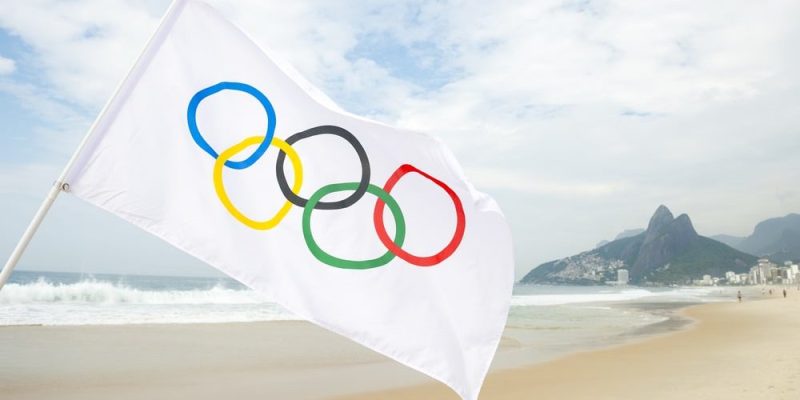
The symbols are characterized by the following:
- Like all signs, symbols They are composed of a material or significant portion, and a mental portion or meaning. . For example, the symbol of the five-pointed red star (signifier) refers in the field of politics to communism and left-wing revolutionary movements (significance).
- The relationship that exists between the signifier and the meaning of a symbol is completely conventional. that is, it responds to a historical, cultural or social agreement, and not to some type of visual similarity or deductive logic. So, without proper learning or training, it is impossible to fully interpret the meaning of a symbol.
- They have a very broad meaning much more than in the case of other types of signs. In fact, a symbol can have multiple interpretations, since different meanings can correspond to the same signifier. For example, the letter “A” is associated with different possible sounds, depending on the language we speak.
- Over time, the specific meaning of a symbol can change transform, and lose and/or gain meanings, given that much of this depends on the historical, cultural and/or social context.
Types of symbols

There are many types of symbols, since human beings turn to them in different contexts. A thematic classification of symbols must differentiate between:
- National symbols . Those that represent a specific nation and are linked to some form of citizenship. For example: the flags and coats of arms of the respective countries, both current and those that have ceased to exist.
- religious symbols . Those that represent a certain religion, creed or specific religious tradition. For example: the cross of Christianity, the Star of David of Judaism and the crescent of Islam.
- Technical and scientific symbols . Those that represent a specific concept, operation, element or notion, and that are part of a specialized language. For example: the square root symbol in mathematics (√), the chemical symbol for oxygen in chemistry (O) or the European currency symbol (€).
- Political or organizational symbols . Those that identify political parties, revolutionary groups and organizations of different types. For example: the red cross of the International Red Cross, the hammer and sickle of Soviet communism, or the international symbol of peace (☮).
- Linguistic symbols . Those that represent the different sounds or the different ideas of a given language. For example, the Latin character for the letter “eme” (M), the Chinese pictogram for “fire” (㈫) or the Greek character for the letter “omega” (Ω).
What are symbols for?
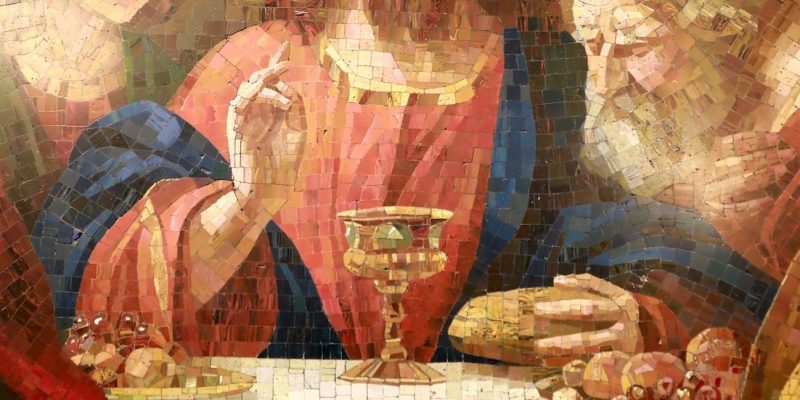
Symbols, like all signs, constitute a mechanism for transmitting information in the absence of the sender, that is, they communicate something even when the sender is not nearby . However, the symbols have a usefulness much greater than the rest of the signs, and that is that They allow us to express deep meanings and bring together sets of ideas. which would otherwise be difficult to convey effectively.
For example, a wounded soldier in the middle of a battlefield can show a white cloth as a flag and thus convey to his enemies his unconditional surrender. Otherwise, he would need to show himself to shout his surrender, possibly in a foreign language and risking being shot before he could say a word.
Difference between signs, symbols and icons

Both symbols, icons and signs are types of signs. . A sign, in this sense, is the union of a material element (signifier) with a mental meaning (meaning), which allows information to be transmitted or evoked. Depending on the relationship between signifier and signified, it is possible to distinguish between three types of signs:
- Indications or indices . They are those signs in which signifier and meaning are united by a logical and evident relationship, since they directly associate a natural physical element with an event, a being or some element that can cause it. For example: a footprint in the mud that alerts a traveler to the proximity of wild animals or a column of smoke that reveals a fire in the distance.
- Icons . They are those signs in which signifier and signified are united by a visual and mimetic relationship, that is, the signifier imitates the visual form of the signified, which allows us to understand at a glance what it is about. For example: emojis or emoticons that represent a human face, Windows icons that resemble a folder or a trash can.
- Symbols . They are those signs in which signifier and signified are united by a conventional relationship, that is, historical or cultural, and therefore this connection cannot be established without adequate knowledge. For example: the double cross of the Orthodox Christian Church, the letters of the Hebrew alphabet or the symbols of musical notation.
References
- “Etymology of Symbol” in the Online Spanish Etymological Dictionary.
- “Symbol” in the Language Dictionary of the Royal Spanish Academy.
- “Symbol” in The Britannica Dictionary.