We explain what wastewater treatment is, its stages and the plants that carry it out. Furthermore, its deficit worldwide.

What is wastewater treatment?
The set of wastewater treatment is known as physical, chemical and biological procedures that convert contaminated water into drinking water . Thus, human beings can use it again.
Wastewater is produced daily, both in our homes, our jobs and in factories, industries and human activities of all kinds. They can be classified into:
- Wastewater The ones we use to wash ourselves, clean our homes or go to the bathroom.
- Polluted waters Those used by industries, factories, metallurgy or other production processes that convert some materials into others.
Although it is known that our planet is 70% water, in reality it is not a resource that we can use unlimitedly and irresponsibly, which is why wastewater treatment is a true necessity.
Wastewater can be treated in dedicated centers, known as wastewater treatment plants. They can also be treated preventively in the places of their use and contamination, through localized mechanisms and processes.
Its objective is to remove impurities from the water biological (bacteria, viruses, decomposing organic matter), chemical (chemical elements that alter its composition, heavy metals, etc.) or physical (earth, dust, sludge, etc.) and allowing the treated water to be usable again .
Wastewater treatment plants

They are known by this name or as purification plants. facilities dedicated to purification of wastewater, using processes of different nature. There are as many types of plant as there are stages of water processing. Some carry out the entire process, while others focus only on specific moments of purification.
Depending on the type, they can take place:
- Physical separations of water and solid waste they may contain (without involving any type of reaction).
- Water treatments with various chemicals and reagents .
- The use of biological or biochemical reactions to counteract certain contaminants present in the liquid.
There are also special treatment plants, in which the specific presence of a specific contaminant is counteracted, according to regional conditions or the industrial activities carried out. These types of treatments generally seek to correct the pH of the water and extract traces of compounds from it that would be toxic to those who consume them.
Wastewater pretreatment
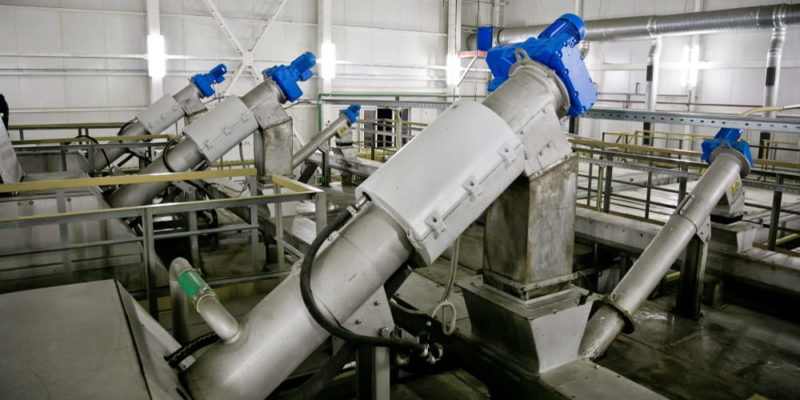
Pretreatment or primary treatment It is the initial stage in wastewater purification . It is often carried out before they arrive at the treatment plant, or in the initial moments of the latter.
The process consists of separating the large and medium-sized solids found in it (such as garbage, pebbles or plastics) through various mesh or sieving patterns, using sieves of different thicknesses. Sand traps are then applied to the water to remove tiny particles of sand that may be dissolved in it, and that the sieves cannot filter.
Water, grease and oil that may be dissolved in the water are extracted by applying special degreasing liquids. Finally, the water is retained for a time in special sedimentation and decanting containers, so that gravity exerts its attraction on the remaining solids and deposits them at the bottom, leaving the water free of them.
All of this pretreatment serves to prepare the water for the formal start of its purification. That is to say that frees water from objects that can obstruct the flow, deteriorate pipes prevent or hinder the reactions to which it will be subjected in the following stages.
Stages of wastewater treatment

Once the pretreatment is completed, the wastewater continues its path through two more stages, which are:
- Secondary or biological treatment This stage aims to degrade materials of organic origin that the water may contain, such as human or animal waste, detergents and soaps, bacteria and microorganisms, etc. For this, different techniques can be used:
- Roughing A new stage of filtering or sieving, using particularly fine sieves that retain the thickest fibers of organic origin, such as papers, fabrics, fabrics, etc.
- Activated sludge Using microorganisms and added oxygen, the water is freed from nutrients and biological waste, including traces of metal, which are part of its metabolism.
- Oxidation beds This mechanism is little used today, generally in old plants, and consists of large seats of charcoal, limestone or plastic, materials that promote the formation of biofilms of bacteria and protozoa that eliminate nutrients and organic waste from the water, through a system of rotating perforated arms.
- Biological reactors Whether mobile bed or membrane, it is a technique that guarantees the elimination of biological nutrients present in the water that could support contaminating microbial life.
- Tertiary or chemical treatment This is the final stage of the treatment, intended to increase the final quality of the water before being returned to the environment (sea, river, lake, etc.). This process may involve:
- Filtration The water is filtered by passing it through beds of sand, charcoal or other materials that retain suspended elements and toxins that may have survived the secondary process.
- Lagoon A successive process of “lagoons” or water spaces, which consist of a first anaerobic, where the densest substances fall by gravity and the lack of oxygen kills certain forms of life, then a facultative lagoon and finally a maturation lagoon. It is an effective mechanism but requires a lot of space.
- Nutrient removal Given that the treated waters, even at the end of the second treatment, retain high levels of nutrients such as nitrogen and phosphorus, which can promote the growth of algae and be toxic to fish and invertebrates, biological oxidation is carried out using certain species of bacteria.
- Disinfection Finally, to reduce the number of microscopic living organisms in the water, using various methods such as the addition of significant doses of chlorine, exposure to lethal doses of ultraviolet (UV) light or chemical bombardment with ozone (O3).
Global water treatment deficit
Since the 1970s, when the polluting effects of the human population explosion began to be seen, it is known that a large percentage of diseases have directly to do with the little or no wastewater treatment policy in many countries.
However, even today the treatment of wastewater at a global level is much lower than that required to make our current existence sustainable, especially in less developed countries. According to UN estimates, In the year 2000, only 44% of the world's population had adequate wastewater treatment conditions .
References
- “Wastewater treatment” on Wikipedia.
- “Learn about the wastewater treatment process” (video) in Prensa Libre.
- “Basic knowledge about Wastewater Treatment Plants” in Iagua.
- “Waste Water Treatment” in ScienceDirect.
- “How do Wastewater Treatment Plants work?” (video) in Concerning Reality.
- “Wastewater Treatment” in The Encyclopaedia Britannica.