We explain everything about Mexico City, where it is located and how its population is. In addition, its characteristics, geography and climate.
How is Mexico City?
Mexico City is the capital of the United Mexican States official name of the country.
It is the largest city of North America and one of the most populated in the world. It has a population of 8.9 million inhabitants, but its metropolitan area exceeds 22 million. It was built, from the conquest, on the ruins of the city of Tenochtitlán, capital of the Aztec empire.
This city is the main urban, social, political, academic, economic, tourist, artistic, business and cultural nation of the Mexican nation and has been the scene of numerous important events in the life and history of the nation. There resides political power and is also the cradle of the rich and vast pre -Columbian, colonial and revolutionary history of Mexican.
Characteristics of Mexico City
Some characteristics of Mexico City are:
- It has 8.9 million inhabitants, but its metropolitan area exceeds 22 million.
- It was built on the old city of Tenochtitlán, capital of the Aztec Empire.
- It is located in the Valley of Mexico, in the center of the country.
- In 1997 it ceased to be a Federal District and became a federative entity.
- It has a subhumid temperate climate of mountain.
- It is surrounded by mountain and volcanoes.
- It is located on a seismically active zone.
- It has an underground network of more than 200 kilometers of extension.
- Insecurity and pollution are some of its main urban problems.
Location, population and extension of Mexico City

Mexico City has a population of 8,900,000 inhabitants, and its metropolitan area reaches 22,000,000 which represents 17.3 % of the country’s population. The city occupies an approximate area of 1486 km2which represents a population density of almost 6000 inhabitants per km2.
It is located in the Valley of Mexico in the center of the country. It borders the north, east and west with the State of Mexico, and to the south with the state of Morelos. It was built on the ancient city of Tenochtitlán, capital of the Aztec Empire, which began to be built on a Texcoco Lake island.
Although Tenochtitlán was practically destroyed, in some places in Mexico City as in the Temple Mayor some archaeological remains of what was the old city could be observed.
Political administration of Mexico City

Mexico City is politically administered as an autonomous federative entity within the United Mexican States. Since 1997 it ceased to be a federal territory and became a federative entity in the country . For that reason, the city as Mexico City is no longer appointed, as it was known for many years.
In this city is the National Palace, headquarters of the Federal Executive Power of the Nation and Heritage of Humanity since 1987.
Like the rest of the other federative states, Mexico City organizes its political administration in three powers: the Executive, the Legislative and the Judicial. The head of the Executive Power of Mexico City is the Head of Government, who is democratically chosen by the inhabitants of the city every six years.
Its territory is subdivided into 16 political and administrative units called mayorships . The two most populated mayors are Iztapalapa with 1,800,000 inhabitants and Gustavo A. Madero with 1,174,000.
Foundation of Mexico City
Mexico City was founded by the Aztecs (Mexican Empire) around the fourteenth century under the name of Tenochtitlán in the immediate vicinity of old populations in the area. These ruins were part of their mythology and religious imaginary, so the Royal Foundation of the first residents of Lake Texcoco is unknown, which could be Olmecs or Toltecs.
The Aztec city controlled the area in its triple alliance with Tlatelolco and Tlacopan, in what was known as the Aztec empire, which was defeated in a bloody war of conquest by the Spanish settlers since 1520.
From then on, Tenochtitlan was called New Spain and was re -founded by Hernán Cortés, who ruled as captain general. Then, the city would become the capital of the Viceroyalty of New Spain, which would last until 1821.
Climate, relief and hydrography of Mexico City
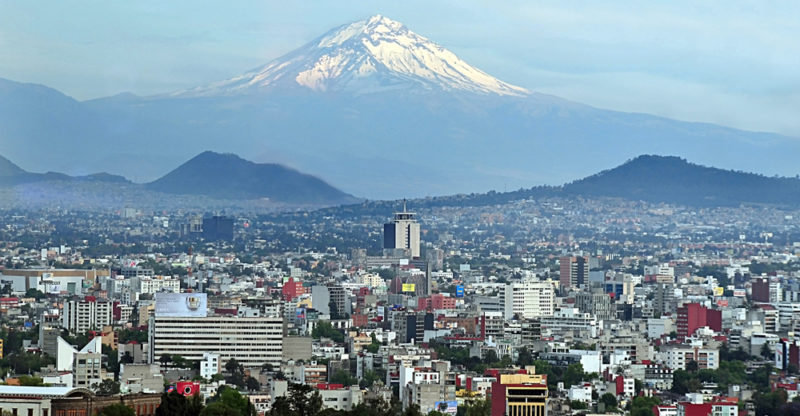
The predominant climate of Mexico City is the subhumid temperate of mountain, which It is characterized by having warm summers and cold winters, and the rains concentrated in the summer months . As the city is more than 2000 meters of altitude, temperatures are lower than other places in Mexico that are at the same latitude.
Mexico City is located on the Valley of Mexico surrounded by mountain chains such as the Sierra de Guadalupe, the Sierra de Ajusco and the Popocatépetl and Iztaccíhuatl volcanoes. Being in an area of plates between the American, the Pacific and Cocos, Mexico is also characterized by the presence of volcanoes, and an important seismic activity so earthquakes are frequent in the country.
Mexico City has numerous forests and urban parks, some of which operate as a protected natural reserve. The main parks in the metropolitan area are:
- Chapultepec Forest and Zoo, the largest in Latin America.
- Forest of San Juan de Aragón.
- Los Coyotes Zoological and Ecological Park.
- Los Venados Park.
- Cerro de la Estrella.
- Xochimilco Ecological Reserve.
- National Desert Park of the Lions.
- Sierra de Guadalupe National Park.
- Cumbres de Ajuso National Park.
Transport in Mexico City
The underground is one of the fundamental pillars of public transport in the city . It consists of several subway lines that connect different points of the city. It has 12 lines and more than 200 kilometers of extension.
In addition to the subway, The city has a nearby trains system known as the Light Rail, which connects some peripheral areas with the center. The suburban train is another railway option that connects the north of the city with nearby municipalities in the State of Mexico.
Collective buses, known as “Microbuses” or “Peeros”, are an integral part of public transport in Mexico City . These small vehicles operate on specific routes and provide a fast and flexible service. Public transport buses with the highest capacity, operated by the Public Transportation System of Mexico City (STC), complement the transport offer in the city.
The transport system is complemented by the taxi and remises options, and with an integrated rental bicycle system that people can use to travel short distances within the city.
Cultural Heritage of Mexico City
In the heart of Mexico City is the historic center declared a World Heritage by UNESCO in 1987. There is the Plaza de la Constitución or the Zocalo, as it is usually known. It is where the National Palace is also, which is decorated with murals by Mexican artist Diego Rivera. The Metropolitan Cathedral is also located near there, considered a masterpiece of colonial architecture.
The main temple, an archaeological zone in the historic center, is a historical vestige of the old city of Tenochtitlan Capital of the Aztec Empire. This archaeological site has a museum that exhibits pre -Hispanic artifacts and other objects of the Aztec culture.
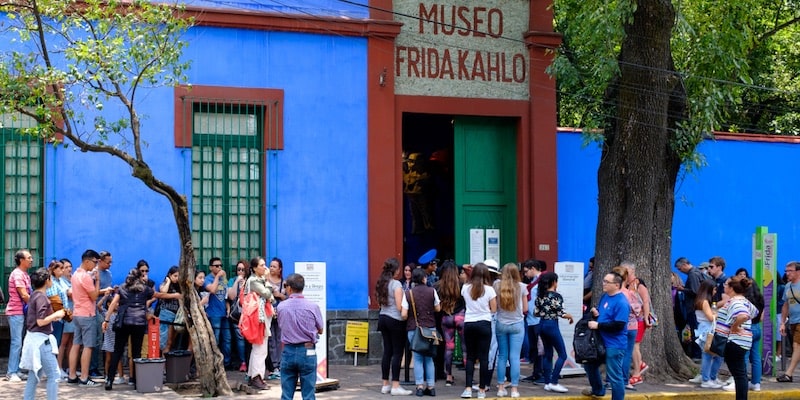
The National Museum of Anthropology is one of the most important in the world in its category and exhibits art collections and objects from the pre -Hispanic civilizations of Mexico. The Frida Kahlo Museum, located in the Casa Azul, allows us to learn more about the life and work of the famous Mexican painter.
The Palace of Fine Arts houses collections of Mexican art, is the home of actions of ballet and opera and is the headquarters of the National Symphony Orchestra. Another important point of reference is Chapultepec Castle, a palace that has served as presidential residence and is now the National Museum of History.
Problems from Mexico City
The main problems of Mexico City are:
- Earthquakes . There have been numerous earthquakes in the history of the city. The most remembered is the 1985 earthquake, which caused a large number of deaths and 8 billion dollars calculated in material damage.
- Pollution . The location of the city in a valley surrounded by mountain chains prevents the passage of the winds and, given the dimensions of the city, generates that the smog accumulates and the pollution levels are alarmingly high.
- Insecurity . Mexico City is known for being one of the most insecure cities in America, along with other Latin American capitals such as Caracas, Managua or cities such as Ciudad Juárez or Rio de Janeiro.
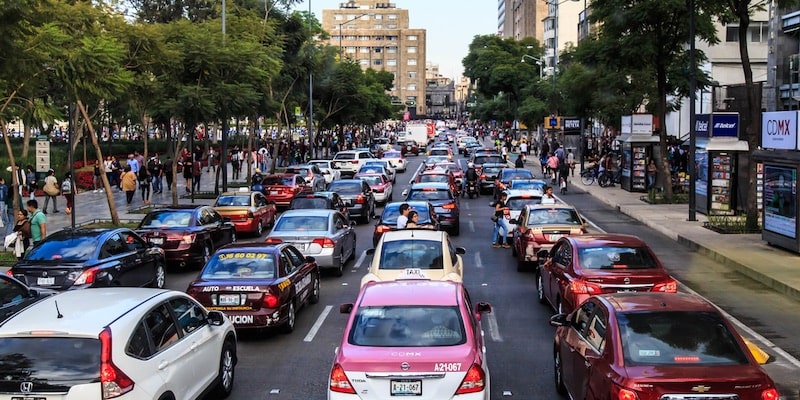
- Overpopulation . The high population density of the city generates important disorders related to circulation, traffic, pollution, treatment of garbage and supply and quality of public services.
Continue with:
References
- World Bank (SF) Mexico: Panorama General. https://www.bancomundial.org/
- Well, I. (2022) The Temple of Tenochtitlán, spiritual center of the Aztec world. https://historia.nationalgeographic.com.es/
- Website of the Government of Mexico City. https://gobierno.cdmx.gob.mx/