
We explain everything about Mexico and its physical and cultural characteristics. In addition, how is its economy, religion and the history of this country.
Mexico
Mexico is a national state whose official name is United Mexican States . It is located in North America and borders the United States and the south with Guatemala and Belize. Its capital is Mexico City . It is the fifth most extensive and third country in America after the United States and Brazil.
Mexico is an old Spanish colony, like almost all the rest of the American continent . For that reason, in this country the Spanish language is spoken. In addition, its architecture shows its colonial history, although it also presents numerous archaeological sites of the pre -Columbian era, as well as indigenous monuments and pyramids.
Currently Mexico has a presidential democratic political system And he is a member of several regional blocks such as NAFTA – USMCAN (North American Free Trade Agreement) together with Canada and the United States, the Pacific Alliance, CELAC (Community of Latin American and Caribbean States) and the OAS (Organization of American States)
Why is it called “Mexico”? The name of the country comes from the Nahuatl language, Mēxihcoword with which the ancient Mexicans or Aztecs baptized their capital (Mexico-Tenochtitlán) and whose translation is a matter of debate. Some theories argue that it means “Mexihtli Place”, one of the names of the tutelary god Azteca Huitzilopochtli.
Characteristics of Mexico
Some characteristics of Mexico are:
- Its population is 127 million inhabitants.
- It has an area of 1973 million square kilometers.
- Its capital is Mexico City, which has 8,900,000 inhabitants, but its metropolitan area reaches 22 million inhabitants.
- Its official language is Spanish.
- Its predominant relief is the plateau high, but there are also mountains, volcanoes and plains.
- Being in areas of tectonic plates edges, it is a country with an important seismic and volcanic activity.
- 19 % of its population is recognized as a member of pre -Columbian indigenous peoples.
- The most important economic activities are agriculture, industry, oil production and tourism.
Extension, population and capital of Mexico

Mexico has an extension of 1,973,000,000 square kilometers so it is the fifth most extensive country in America and the fourteenth of the world. It has a population of 127,000,000 inhabitants and a population density of 64.3 inhabitants per square kilometer.
Mexico is divided into 32 federative entities . These are composed of 31 more states in Mexico City, which is considered a special federative entity. The most populated states, in addition to Mexico City, are Jalisco, Veracruz and Puebla.
The capital of Mexico is Mexico City . Its metropolitan area has a population of 22,000,000 inhabitants, representing 17.3 % of the country’s total. Mexico City was built, from the conquest, on the ruins of the city of Tenochtitlán, capital of the Aztec empire.
To avoid illegal immigration, in 1994 the United States began to build a wall on the border with Mexico. At present, this wall has an approximate extension of 1100 kilometers, and separates the United States from Mexican federative entities such as Chihuahua, Sonora and Baja California.
Climate, relief and hydrography of Mexico
Due to its great latitudinal extension and its varied relief, Mexico presents a variety of climate types. In the south the tropical warm climate prevails which is characterized by having high temperatures and abundant rainfall almost all year. In the high regions of the center of the country, temperatures decrease due to altitude action and has cooler summers and colder winters. In the north, in regions near the border with the United States, the weather is warm but very dry.
The Gulf of Mexico and the Yucatan Peninsula are also characterized by The formation of important hurricanes in the summer . During the heat months, the formation of important tropical storms is frequent that, when they enter the continent, produce great damage to the infrastructure of the coastal regions.
The predominant relief of Mexico is the high plateau which extends in more than 70% of the territory. In addition, there is mountainous relief mainly in the Sierra Madre Oriental and Western, which cross from north to south to the country. The most important plains are in the south near the Gulf of Mexico.
Being in an area of plates between the American, the Pacific and Cocos, Mexico is also characterized by the presence of volcanoes, and an important seismic activity so earthquakes are frequent in the country.
As for hydrography, the most important rivers in Mexico are the Rio Bravo which is the natural limit with the United States and has 3000 kilometers of extension, The Colorado River with 2330 and The Usumacinta River with 1000.
Culture of Mexico

As with numerous Latin American nations, Mexican culture is the result of a complex syncretism process. Their influences combine The Spanish Catholic tradition, the pre -Columbian indigenous religions and beliefs and the African cultural contributions that arrived on the continent as part of the transatlantic slave traffic system during the Spanish conquest.
It is estimated that more than 23 million people in Mexico are identified as part of the original peoples that lived in the region before the Spanish conquest, which represents 19 % of the total population. Federative entities with the highest percentage of indigenous population are Oaxaca (31.2 %), Chiapas (28.2 %) and Yucatan (23.7 %)
From the promulgation of the Nation as a multi -ethnic state in the Constitution of 1917 and the successive protection of many of the native cultures, Mexico considers as national languages both in Spanish and 65 of indigenous languages among which the Nahuatl and the Yucatecan Mayan (totaling almost 2 million people) predominate by the number of speakers.
Regarding music, Mexico has a folklore extremely rich in popular musical traditions (such as Corrido and La Ranchera), and Mariachi, musical emblem of the Mexican tradition of early and mid -twentieth century is internationally known.
Mexico has also highlighted in literature With names of world importance such as Sor Juana de la Cruz, Octavio Paz (winner of the Nobel Prize in 1990), Juan Rulfo, Jame Sabines and Elena Poniatowska, and in the painting, with Diego Rivera and Frida Kahlo as maximum exponents.
National symbols of Mexico
The national symbols of Mexico are:
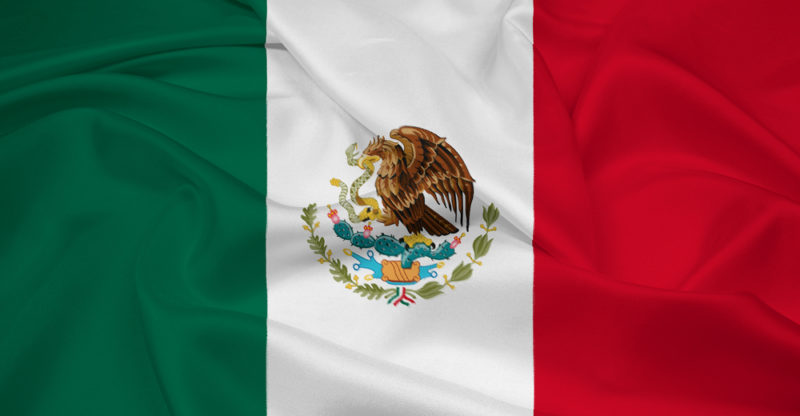
- The flag of Mexico . It shows three vertical stripes of green, white and red, and in the center is the Mexican weapons shield. Its current version was adopted in 1968.
- The Mexican National Anthem . It was written by Francisco González Bocanegra and music was composed of Jaime Nunó. He was adopted as a national anthem in 1943.
- THE MEXICO CLIDE . It was created in 1968. It is on the Mexican flag, in the central white strip. It has a golden eagle catching a snake on a cactus.
Economic Activities of Mexico
The official currency of Mexico is the Mexican weight. The most important economic activities in Mexico are:
- Agriculture. Mexico is one of the main producers and exporters of tomato, peppers, red fruits and avocado.
- Industry . The manufacturing industry is one of Mexico’s main economic activities today. Sectors such as automotive, processed foods, petrochemicals and textiles are some of the main producers and exporters of Mexican manufacturing.
- Oil production . Mexico is an important producer and exporter of Petroleum in America, with an average production of more than 230,000 barrels of oil per day.
- Tourism . Tourism is a crucial activity for the Mexican economy. It has different types of tourist attractions, such as its enormous cultural and historical heritage and its beaches, which attract millions of visitors every year.
History of Mexico
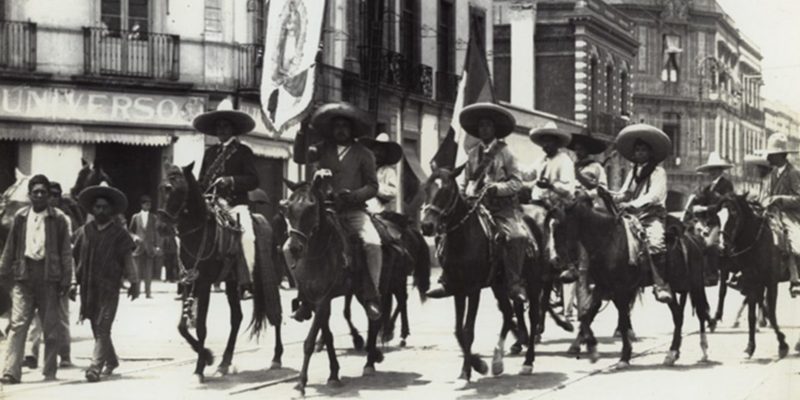
The first human settlements in the territory of Mexico date back more than 10,000 years. Subsequently, Mesoamerican populations, such as the Olmecs, Teotihuacanos, Maya, Zapotec, Toltecs, Mixtecs and finally Mexica or Aztecs, followed in importance as a cultural and political center of the region until the arrival of the Spanish conquerors headed by Hernán Cortés in the 16th century.
The next stage was a war of conquest that culminated in the submission of aboriginal populations and the creation of a colonial state: the Viceroyalty of New Spain. It was a strongly stratified society, composed of Spanish, indigenous and African slaves, and based on the exploitation of resources such as silver and gold.
The Napoleonic wars in the nineteenth century favored the emergence of independence movements in the Spanish colonies of America, which began their respective wars of independence. Mexican Independence was achieved in 1821 and gave rise to the first Mexican Empire (1821-1823) and then to the First Federal Republic (1824-1835), followed by a conflict between centralists and federalists.
In its history as an independent nation, Mexico survived two French interventions and an American. In these episodes he lost a significant part of his territory and crossed political transformations such as the Maximilian Empire (1864-1867). The Republic was restored by Benito Juárez in 1867.
Between 1876 and 1911 an authoritarian regime headed by Porfirio Díaz, who was overthrown in the context of the Mexican Revolution initiated in 1910. After the revolution, a modern democratic state based on the Mexican Constitution of 1917 was created.
Since 1930 the National Revolutionary Party began to govern, then called the Institutional Revolutionary Party (PRI), which remained in power for seventy years. In January 1994, the North American Free Trade Agreement entered into force and there was a neo -Zapatist uprising in Chiapas.
In 2000, there was a political alternation after the election of Vicente Fox of the National Action Party. In 2018, Andrés Manuel López Obrador of the National Regeneration Movement assumed.
References
- World Bank (SF) Mexico: Panorama General. https://www.bancomundial.org/
- INEGI (2022) Statistics on the International Day of Indigenous Peoples. https://www.inegi.org.mx/
- Prieto, G (2015) The climate of Mexico through maps. https://www.geografiainfinita.com/
- Ministry of Agriculture and Rural Development of Mexico (2020) Mexico and its exports. https://www.gob.mx/


