We explain what the pillars of education are, its creator and what it means to learn to know, do, be and live with others.
Pillars of education
The four pillars of education are the four foundations that support the educational act as one of the most important in society. Were established by Jacques Delors (1925-) in a report presented to UNESCO. This French politician headed the European delegation to the second International Commission on Education, convened by UNESCO in 1991.
Under the title “Education contains a treasure”, the also called “Delors Report” was a synthesis of what was thought and said about education from ancient thinkers such as Confucius or Socrates, to other contemporaries such as Durkheim or Gramsci.
There, the existence of these four pillars of education was proposed, that is, four objectives that education should meet. The pillars were defined as: “learning to know”, “learning to do”, “learning to be” and “learning to live with others” .
Learn to know
This principle establishes that education should not be content with transmitting to new generations the content or knowledge developed by third parties, as if memorizing were enough, but should teach how to learn.
This means teach how to build knowledge so that you can continue learning throughout your life one can acquire a critical stance regarding knowledge and one can direct one's thinking towards transcendent values. In simpler terms, It's about teaching how to think .
Learn to do
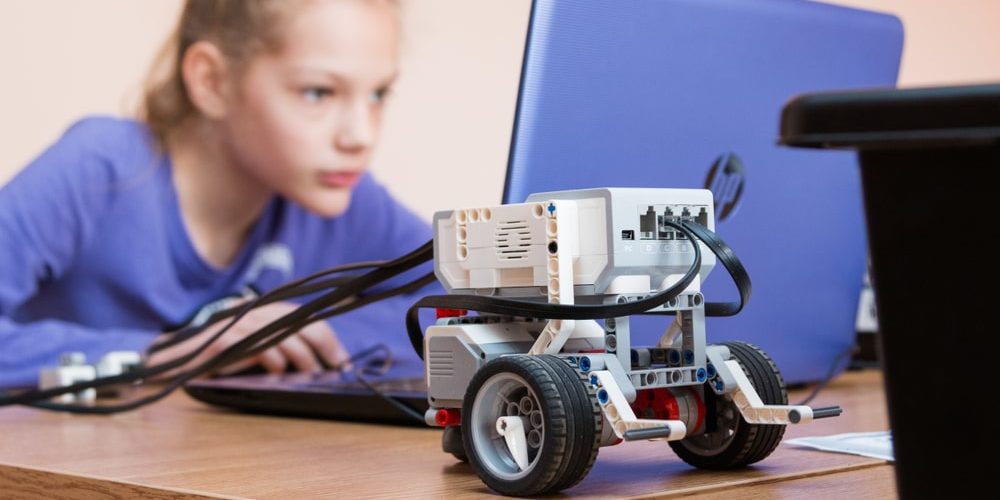
However, theoretical knowledge is not enough to make humanity's life better and more productive, so it is also essential to put it into practice.
This is what learning to do refers to: teach the techniques, but also their ethical and practical sense so that future generations can build their own and develop new practices. This pillar is related to work, to the commitment to the improvement of society and to the dignity of human beings in relation to their subsistence activities.
Learn to be
Given that in education and the comprehensive training of the individual, not only knowledge is transmitted, but also values and perspectives, education must also teach how to be, that is, it must forge identity based on desired values in order to guarantee better generations that are more committed to the virtues of culture.
In this way, the mere utilitarian sense of education must be transcended to form individuals and individualities, endowed with a sense of belonging, justice, transcendence and truth .
Learn to live with others

Finally, education must teach how to live together, that is, it must face the difficulties that as a global society arise for humanity in the 21st century. We are referring to violence, discrimination, inequality and injustice, problems that seem very difficult to solve, but which still must begin to be thought about from an early age.
The social, moral and ethical formation of the new generations depends only on their education at the hands of the previous ones. That is why it is essential educate based on harmony in the discovery of the other, and in a deep sense of community that allows for resolving existing or future differences in a civilized, responsible and, above all, ethical manner.
References
- “Four pillars of education” in ABC Color (Paraguay).
- “The four pillars of education” by Jacques Delors in Education contains a treasure (Mexico).
- “The four pillars of education for the 21st century” in Magisterio (Colombia).
- “The four pillars of education” at InfoCollection.org.