We explain everything about the flag of Mexico and what their colors and shield represent. In addition, the history and characteristics of the anthem and the national shield.
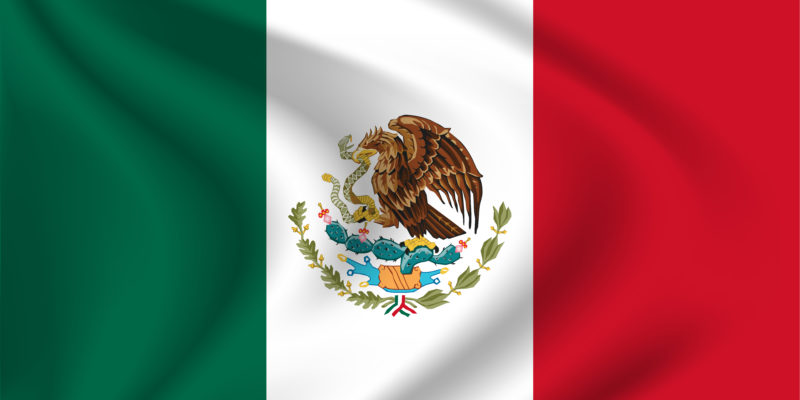
How is the flag of Mexico?
The flag of Mexico is one of the national symbols of the Republic of Mexico . It has a rectangular shape and is divided into three vertical areas of green, white and red. In the part of the center (white zone) it contains the national shield.
This badge is an identity symbol for Mexicans because it brings together the values of the nation . It was raised for the first time in 1821 and every February 24 its day is celebrated. Its current version was officially adopted in 1968.
The flag is, together with the shield and the anthem, one of the symbols of Mexican identity. Its characteristics and use protocol are specified in the law on national shield, flag and anthem promulgated in 1984.
Characteristics of the Flag of Mexico

Some characteristics of the Mexico flag are:
- Together with the national shield and anthem, it is one of the symbols of Mexico.
- It is composed of three vertical stripes of green, white and red.
- In the center has the coat of arms of Mexico, which consists of an eagle on a cactus.
- Its colors origin in the flag of the trigrator army of 1821.
- It was officially adopted in 1968.
- Its day is celebrated on February 24, when the oath is also held to the flag in Mexican schools.
- It has a high-long proportion of 4: 7.
- There is a flag of official use and another for civil use. The official use flag carries the shield in colors while the second presents the black and white shield or in gray tones.
Origin and History of the Flag of Mexico
In the pre -Columbian era there was no flag concept as it is understood today. However, there was a type of pictography that represented each of the pre -Columbian cultures (in the case of Mexicans, it was the image of a cactus).
The first registration of the Mexican tricolor flag emerged in 1821 when the trigratante army, commanded by Agustín de Iturbide, fought for Mexican independence against the Spaniards. This design already included the figure of the eagle perched on a cactus, as well as the crown of the empire and the shield to the center, although the eagle did not appear as in the current flag with a snake in its mouth.
The flag design was suffering small modifications over the nineteenth and twentieth centuries, especially in the elements that make up the shield. The variations happened until 1968, the year in which the current Mexican flag was formalized. In 1984 a law was sanctioned in which the official characteristics of the flag, the anthem and the shield were specified.
The colors of the flag of Mexico
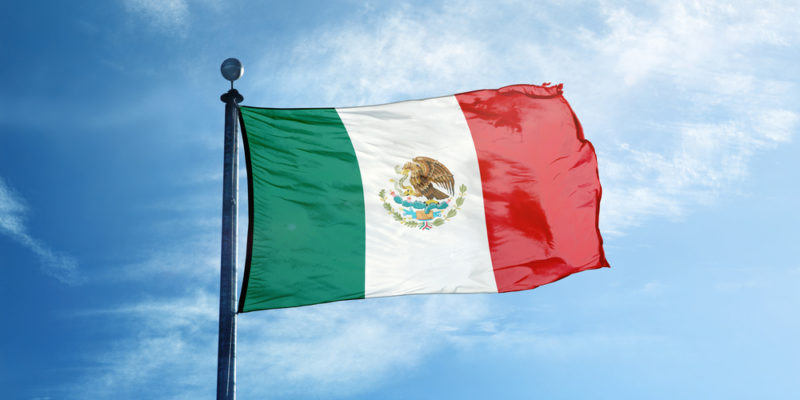
Although the colors of the flag of Mexico have been maintained since 1821, the meaning of each of them was modified .
At first, the white color represented the religion and faith of the inhabitants towards the Catholic Church; The red color represented the union, which referred to the links between Americans and the growing wave of immigrants; and green symbolized the freedom and independence of the Mexican people of the Spaniards.
Currently the meaning of colors has been modified: Green represents hope, white symbolizes unity and red the blood of the deceased fighters .
Flag
Although it is not part of the official protocol established by the 1984 law, the oath ceremony to the flag is a significant fact in schools throughout Mexico. It is done every February 24 when children recite the following oath:
Flag of Mexico!,
Legacy of our heroes
Unit symbol
of our parents
And of our brothers,
We promise to always be faithful
To the principles of freedom and justice
what do our homeland
The independent nation,
human and generous
to which we deliver our existence.
THE MEXICO CLIDE
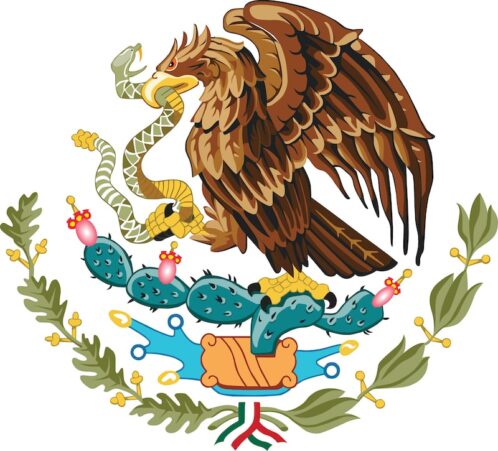
The shield that is in the central part of the flag of Mexico is formed by an eagle that has a snake in its mouth and is perched on a cactus.
This image refers to the legend that says that the Mexicans received a message from the gods, in which they were told that they should found the city where they saw the image of an eagle perched on a nopal. The eagle that devours a snake symbolizes the end of the MEXICA Journey and the beginning of the Tenochtitlán Foundation today known as Mexico City.
The shield was suffering different modifications throughout history . In the beginning, it was formed by an eagle perched on a cactus with a crown, then the crown was removed and branches of olive trees and laurels were added to represent the Republic.
During the second Mexican empire (1864-1867) the shield adopted a new format, a larger crown, swords and a gold frame was added.
During the Government of Porfirio Díaz, between 1884 and 1909, changes in the shield were made, although the essence and meaning of this symbol remained. Subsequently, in 1917, the shield suffered another small modification: the eagle began to be drawn in profile in the direction of the left side.
The National Anthem of Mexico
The National Anthem of Mexico is, together with the flag and the shield, one of the three emblems of the country. The anthem has been known since 1854 but it was made official only in 1943 .
The letter of the Mexican anthem was created by Francisco González Bocanegra who was the winner of the contest carried out by the Mexican government in 1853 for the election of the country song. The music was composed of Jaime Nunó. The version of the anthem currently used is formed by four stanzas and a chorus.
Although it is written in Spanish, The Mexican government authorizes each community and indigenous people to translate it to their corresponding languages .
The letter of the Mexican national anthem says:
CHOIR
Mexicans, war shout
The Steel prepared and the Bridon,
and retail in its centers the land
To the loud roar of the cannon.Ciña oh homeland! Your Oliva temples
Of peace the divine archangel,
That in heaven your eternal destiny
By the finger of God was written.More if you dare a strange enemy
Profar your floor with your floor,
Think of my beloved homeland! than heaven
A soldier in each child gave you.Choir II
War, war without truce to the one who tries
Of the homeland stain the blazons!
War, war! The homelands
In the waves of blood soaked.War, war! In the mountain, in the valley
The Horrísososososos Cañones Truen,
And sound echoes resonate
With the voices of union! Freedom!Choir III
Before, homeland, that your children innerme
Under the yoke your neck bent,
Your Blood Campiñas are irrigated,
His foot is stamped on blood.And your temples, palaces and towers
They collapse with a rumble,
And their ruins exist saying:
From one thousand heroes the homeland here was.Choir IV
Homeland! homeland! Your children swore you
Exhaling your breath,
If the Clarín with his war accent
Summons them to deal with courage.For you the olive garlands!
A memory for them of glory!
A laurel for you of you!
A sepulcher for them of honor!CHOIR
Mexicans, war shout
The Steel prepared and the Bridon,
And retail in its centers the land
To the loud roar of the cannon.
Follow in: Mexican National Anthem
References
- “History of the flag of Mexico” at https://www.gob.mx/.
- “Mexican National Flag” at https://www.aguascalientes.gob.mx/.
- Chamber of Deputies of the Honorable Council of the Union (1984) Nation’s law on the national flag and anthem. Last Update January 19, 2023 https://www.diputados.gob.mx/
- Mexico Government Website (2018) History of the Flag of Mexico. https://www.gob.mx/
- “Official letter of the National Anthem of Mexico” at https://www.seducoahuila.gob.mx/